
How Sugar Spikes Affect Your Body: Causes, Effects, Prevention & Ayurvedic Ways to Support Healthy Blood Sugar Naturally
Table of Contents
- What Is a Sugar Spike?
- How Your Body Processes Blood Sugar Normally
- Why Do Sugar Spikes Happen?
- Common Symptoms You Shouldn’t Ignore
- The Hidden Effects of Frequent Sugar Spikes
- Who Is Most at Risk?
- Foods That Trigger Sharp Glucose Spikes
- Nourishing Foods That Help Keep Blood Sugar Steady
- Practical, Everyday Ways to Prevent Spikes Naturally
- The Ayurvedic Perspective on Glucose Balance
- Ayurvedic Herbs for Metabolic Support
- Simple Lifestyle Habits for Better Daily Balance
- Debunking Common Myths About Blood Sugar
- When Is It Time to See a Doctor?
- Frequently Asked Questions
- Wrapping It Up
What Is a Sugar Spike?
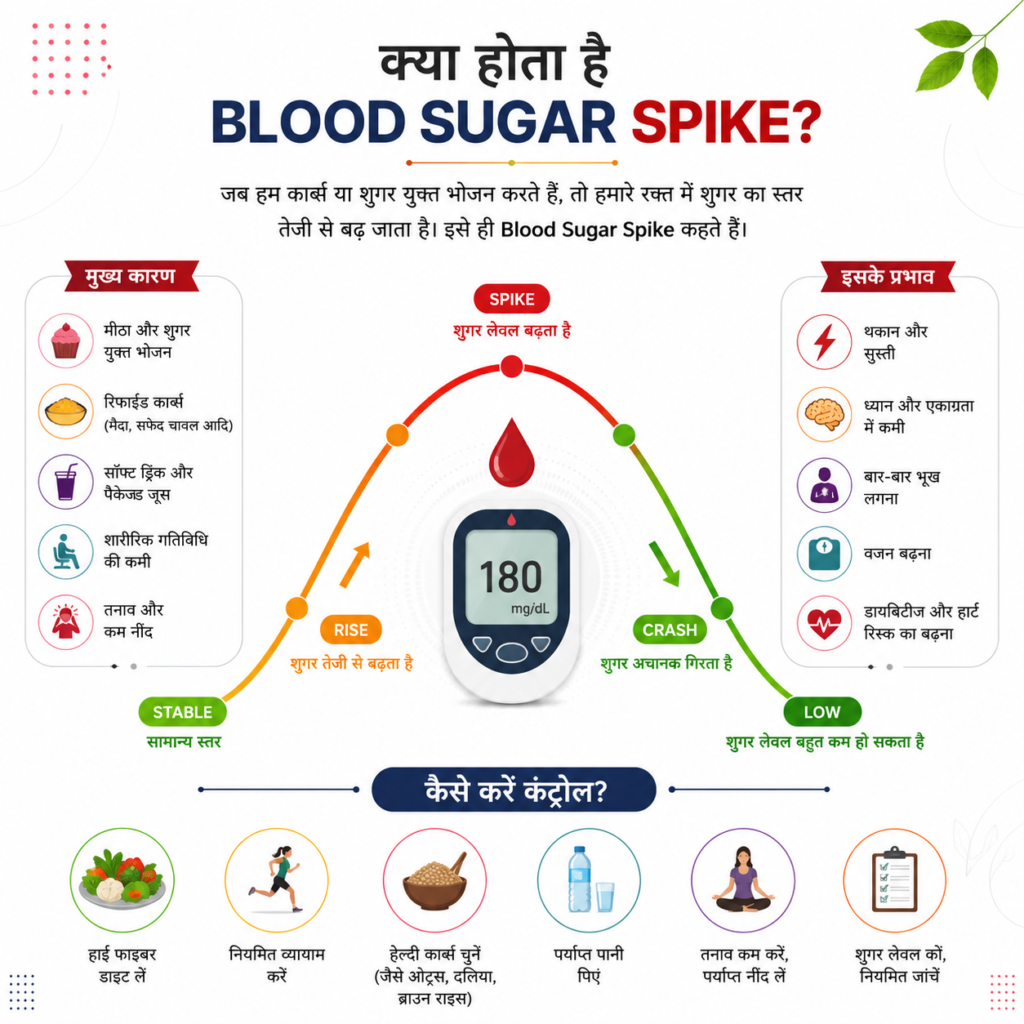
Picture this: you finish a large bowl of pasta, a slice of cake, or even a big glass of fruit juice. About 30 to 60 minutes later, you feel a sudden surge of energy, followed very quickly by an overwhelming urge to close your eyes and nap.
That sudden roller-coaster ride is often caused by a sugar spike (medically referred to as a postprandial glucose spike).
A blood sugar spike happens when glucose floods your bloodstream faster than your body can clear it out.
When you consume carbohydrate-heavy or sugary foods, your digestive system breaks them down into simple sugars—primarily glucose. That glucose pours into your blood. If it arrives all at once, your blood sugar level shoots up rapidly.
Having an occasional spike after a birthday celebration or holiday feast is completely normal. Our bodies are designed to manage periodic surges. However, when your blood sugar jumps up and down multiple times a day, week after week, it strains your metabolism and sets the stage for chronic fatigue, stubborn weight gain, and long-term health complications.
How Your Body Processes Blood Sugar Normally
To understand why spikes happen, it helps to look at how a healthy metabolic system handles a meal.
[ Eat Food ] ➔ [ Breakdown to Glucose ] ➔ [ Enters Bloodstream ] ➔ [ Pancreas Releases Insulin ] ➔ [ Cells Absorb Glucose for Energy ]
- Digestion Begins: As you chew and digest your food, carbohydrates break down into glucose molecules.
- Absorption into Blood: Glucose passes through the walls of your small intestine and enters your bloodstream. This triggers a signal to your pancreas.
- Insulin to the Rescue: Your pancreas produces insulin, a critical hormone that acts like a key unlocking your cells (muscles, organs, and fat tissue).
- Energy Production: Once insulin opens the doors, glucose leaves the blood and enters your cells to be used for immediate energy or stored for later use.
When this system runs smoothly, your blood sugar rises gently after eating and gradually returns to its baseline level within two hours. A spike occurs when carbohydrates break down so fast that your pancreas has to rush out massive amounts of insulin to clean up the excess sugar.
Why Do Sugar Spikes Happen?
It’s easy to blame sweets, but sugar spikes aren’t caused by candy alone. A variety of daily factors work together to throw your blood sugar off balance.
1. Eating Only Carbohydrates
When you eat carbohydrates alone—without protein, healthy fat, or fiber to slow them down—your stomach empties very quickly. A bagel, a bowl of white rice, or a potato chip digested on an empty stomach turns into glucose almost instantly.
2. Liquid Sugars
Sodas, sweetened iced teas, sports drinks, and even 100% fruit juices lack intact fiber. Because your body doesn’t need to do any heavy digestive work to break down liquids, sugar rushes into your bloodstream within minutes.
3. Physical Inactivity
Your physical muscles are giant reservoirs for glucose storage. When you sit for long stretches after eating, your muscles remain idle and don’t draw in much glucose, leaving it circulating in your bloodstream longer.
4. Chronic Stress
When you’re stressed, your adrenal glands release stress hormones like cortisol and adrenaline. These hormones tell your liver to release stored glucose into the blood to give you emergency “fight or flight” energy—even if you’re just sitting at a desk stressed about an email.
5. Poor Sleep Quality
Getting fewer than 7 hours of sleep disrupts your body’s hormonal balance. It raises cortisol and lowers insulin sensitivity, meaning even a simple meal the next day will trigger a larger blood sugar response than usual.
Common Symptoms You Shouldn’t Ignore
Not everyone notices when their blood sugar spikes, but your body usually sends subtle signals. Recognizing these signs early helps you make mid-day adjustments before feeling completely drained.
- The Post-Meal “Coma”: Feeling extremely sluggish or sleepy 30 to 90 minutes after eating.
- Intense Brain Fog: Difficulty focusing, typing, or remembering simple details shortly after meals.
- Unquenchable Thirst: Feeling like you can’t drink enough water because your body is trying to flush out excess glucose through urine.
- Frequent Bathroom Visits: Needing to urinate far more often than usual, especially shortly after eating high-carb meals.
- Mild Headaches: Sudden throbbing or pressure behind your eyes as blood sugar fluctuates wildly.
- Irritability or “Hangry” Feelings: Rapid drops following a spike leave your brain starving for quick fuel, triggering mood swings and intense cravings for sweets.
The Hidden Effects of Frequent Sugar Spikes
If a sugar spike just meant feeling tired for an hour, it wouldn’t be a big concern. The real problem lies in what happens inside your tissues over time when blood glucose repeatedly swings wildly.
Frequent High-Sugar Meals ➔ Constant Insulin Surges ➔ Cells Become Unresponsive (Insulin Resistance) ➔ Pancreas Overworks ➔ Excess Sugar Stored as Fat
Insulin Resistance
When cells are bombarded with high insulin levels constantly, they protect themselves by turning down their responsiveness. Think of it like living near a noisy train track—eventually, you tune out the noise. When your cells tune out insulin, your pancreas has to produce even more insulin to force glucose inside. This state is known as insulin resistance.
Energy Crashes and Vicious Cravings
What goes up rapidly must come down just as fast. When your pancreas releases a massive wave of insulin to deal with a spike, it sometimes overcorrects. Blood sugar drops sharply below normal, triggering intense cravings for quick-fix carbohydrates (pastries, chips, sodas). This creates a cycle of spiking and crashing all day long.
Systemic Inflammation and Vessel Damage
Glucose molecules in high concentrations can stick to proteins and fats in your bloodstream in a process called glycation. This forms harmful compounds known as AGEs (Advanced Glycation End-products), which stiffen blood vessels, inflame tissues, and place stress on your heart, eyes, and kidneys over time.
Who Is Most at Risk?
While anyone can experience a sugar spike after a heavy meal, certain people are naturally more sensitive to carbohydrate-heavy foods:
- Individuals with Prediabetes or Type 2 Diabetes: Their cells are already resistant to insulin, or their pancreas doesn’t produce enough to handle incoming glucose smoothly.
- People with Sedentary Routines: Desk workers and those who move very little throughout the day have lower muscle-glucose clearance rates.
- Women with PCOS (Polycystic Ovary Syndrome): PCOS is closely tied to insulin resistance, making blood sugar management trickier.
- Individuals Under High Chronic Stress: Elevated baseline cortisol levels keep the liver releasing extra glucose into the blood.
- Anyone Experiencing Chronic Sleep Deprivation: Habitual short-sleepers have altered hormone levels that reduce insulin efficiency.
Foods That Trigger Sharp Glucose Spikes
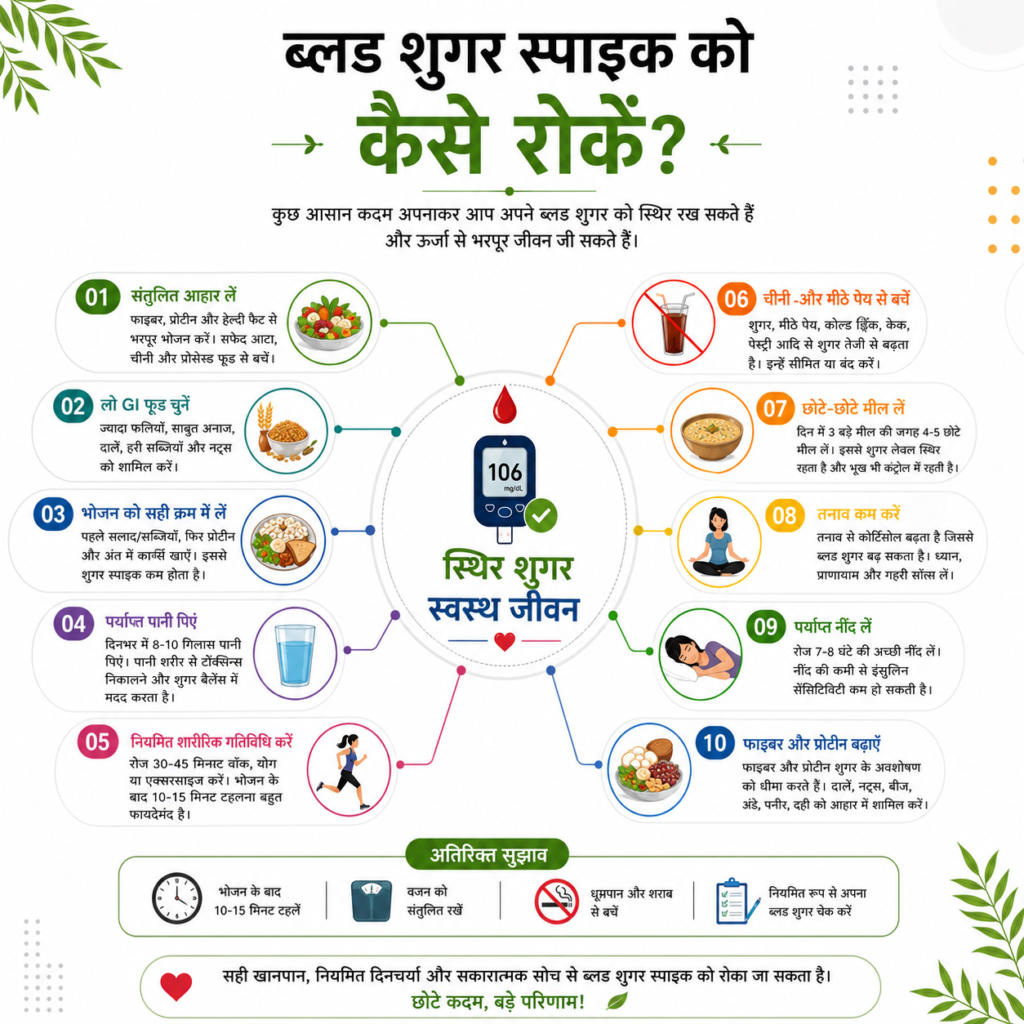
Knowing which foods cause sudden surges allows you to make smarter choices without feeling deprived.
| Category | High-Spike Risk Foods |
| Refined Grains | White bread, refined pasta, white flour bakery goods, instant noodles |
| Sweetened Beverages | Sodas, energy drinks, sweetened coffee beverages, commercial smoothies, bottled juices |
| Processed Snacks | Potato chips, pretzels, rice cakes, packaged biscuits, sugary breakfast cereals |
| Sweets & Desserts | Doughnuts, cakes, pastries, ice cream, candy bars, high-fructose corn syrups |
| Condiments & Sauces | Ketchup, sweetened barbecue sauces, commercial salad dressings with added sugars |
Nourishing Foods That Help Keep Blood Sugar Steady
Managing your blood sugar doesn’t mean giving up carbs forever. It’s about building a meal plate that slows down digestion so glucose drips into your blood gently rather than surging all at once.
High-Fiber Stars
- Non-starchy Vegetables: Broccoli, cauliflower, spinach, kale, cucumbers, and zucchini.
- Legumes & Beans: Lentils, chickpeas, black beans, and kidney beans (packed with fiber and plant protein).
- Whole Grains: Steel-cut oats, quinoa, brown or wild rice, millet, and barley.
Quality Proteins
- Plant Proteins: Tofu, tempeh, paneer, and edamame.
- Animal Proteins: Eggs, wild-caught fish, chicken, and turkey.
Healthy Fats
- Nuts & Seeds: Almonds, walnuts, chia seeds, flaxseeds, pumpkin seeds, and sunflower seeds.
- Whole Fats: Avocados, extra-virgin olive oil, and cold-pressed sesame or mustard oil.
Practical, Everyday Ways to Prevent Spikes Naturally
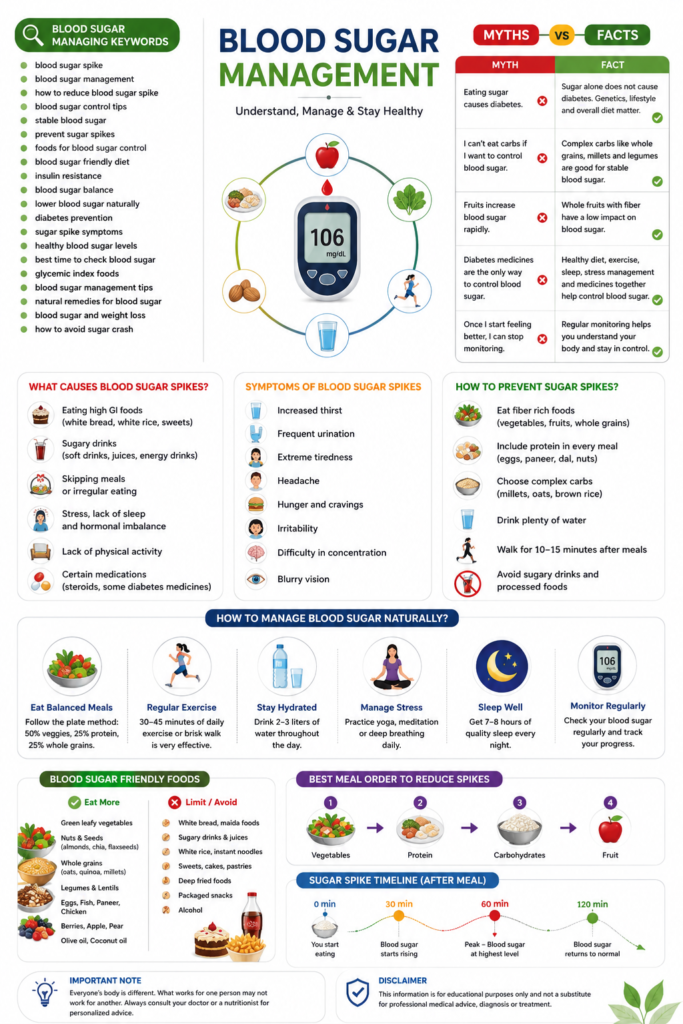
You don’t need radical diets to balance your glucose. Simple, practical tweaks to how and when you eat can make a significant difference.
1. Change Your Meal Order
The order in which you eat food on your plate matters.
Pro Tip: Eat your vegetables and fiber first, followed by your protein and fats, and finish with your carbohydrates.
The fiber creates a protective mesh in your gut that slows down how quickly your body absorbs carbohydrates eaten at the end of the meal.
1st: Vegetables & Fiber ➔ 2nd: Protein & Fats ➔ 3rd: Carbohydrates
2. Put a “Clothing” Layer on Your Carbs
Never eat carbs completely alone. If you want an apple or a piece of sourdough bread, pair it with a handful of almonds, a spoon of peanut butter, or a hard-boiled egg. The fat and protein act as brakes on carbohydrate digestion.
3. Take a 10-Minute Post-Meal Walk
Instead of slumping onto the couch immediately after dinner, clear the table and step outside for a 10-minute stroll. Light activity triggers your muscle cells to absorb glucose straight out of your blood without needing extra insulin.
4. Hydrate Consistently
When you are dehydrated, the volume of blood in your body decreases, which makes the sugar in your blood more concentrated. Drinking plain water throughout the day helps your kidneys naturally filter out extra glucose through urine.
The Ayurvedic Perspective on Glucose Balance
In traditional Ayurveda, the concept of metabolic health is deeply linked to Agni (your digestive fire) and the balance of the three primary doshas—Vata, Pitta, and Kapha.
When blood sugar balance is disrupted, Ayurveda generally views it as an imbalance in Kapha dosha combined with weakened Agni. When Agni is low, the body cannot digest food thoroughly, leading to the formation of Ama (metabolic toxins). Ama accumulates in tissue channels, slowing down nutrient absorption and disrupting tissue metabolism (Dhatu Agni).
To support balanced blood sugar, Ayurveda focuses on three pillars:
- Ahara (Dietary Nurturance): Preferring warm, light, freshly cooked meals with bitter (Tikta), astringent (Kashaya), and pungent (Katu) tastes that balance Kapha and stimulate Agni.
- Vihara (Lifestyle Habits): Maintaining regular daily routines, avoiding day sleeping (Diva Swapna), and engaging in consistent physical movement.
- Aushadhi (Herbal Support): Using specific plant botanicals known to kindle digestion and promote balanced metabolic function.
Ayurvedic Herbs for Metabolic Support
Ayurveda uses several well-known herbs to complement daily diet and lifestyle adjustments.
| Gudmar (Glucose Blocker) | Karela (Bitter Purifier) | Jamun Seed (Slows Starch Conversion) |
| Methi (Fiber-Rich) | Amla (Antioxidant) | Turmeric (Soothes Inflammation) |
Gudmar (Gymnema sylvestre)
Literally translated as “the sugar destroyer,” Gudmar has been used for centuries. When chewed directly, its active constituents temporarily block the sweet taste receptors on your tongue, reducing cravings for sugary treats. It also supports healthy glucose uptake in the digestive tract.
Karela (Bitter Gourd / Momordica charantia)
Although its bitter taste isn’t for everyone, Karela contains active compounds like charantin and polypeptide-p that naturally support healthy cellular glucose absorption and digestive fire.
Jamun Seed (Syzygium cumini)
Jamun seeds contain a glycoside called jamboline, which traditionally helps slow down the conversion of dietary starches into glucose, promoting steady post-meal blood sugar levels.
Methi (Fenugreek / Trigonella foenum-graecum)
Packed with mucilaginous soluble fiber, soaked fenugreek seeds or fenugreek powder slow down carbohydrate digestion and help support healthy insulin responses.
Amla (Indian Gooseberry / Phyllanthus emblica)
One of the richest natural sources of Vitamin C and antioxidants, Amla supports overall cellular health, strengthens Agni, and protects blood vessels from oxidative stress caused by high glucose levels.
Haridra (Turmeric / Curcuma longa)
Curcumin, the bioactive compound in turmeric, helps support clear metabolic channels, reduces baseline systemic inflammation, and works synergistically with Amla (a classic Ayurvedic combination known as Nisha-Amalaki).
Note: Ayurvedic herbs are supportive practices, not medical cures. If you take prescription blood sugar medication, always consult your physician before adding herbal supplements, as combining them may cause blood sugar to drop too low.
Simple Lifestyle Habits for Better Daily Balance
Here is a quick checklist of practical daily habits to help keep your glucose levels steady:
- Eat at regular intervals: Stick to predictable meal windows so your body prepares digestive enzymes in advance.
- Prioritize a protein-rich breakfast: Swap sugary cereals or jam toast for eggs, savory oats, or a protein-vegetable bowl.
- Move every hour: If you work at a desk, stand up, stretch, or do 10 squats every 60 minutes.
- Limit liquid calories: Replace sodas and sweetened teas with herbal infusions, warm lemon water, or buttermilk.
- Build a wind-down routine: Turn off screens an hour before bed to promote restorative deep sleep.
- Practice stress reduction: Spend 5–10 minutes doing deep belly breathing (Pranayama) or meditation daily to keep cortisol levels in check.
Debunking Common Myths About Blood Sugar
Myth 1: “Only people with diabetes need to care about sugar spikes.”
Fact: False. Even if your fasting blood sugar is completely normal, frequent sharp glucose spikes damage blood vessels, drain your daily energy, worsen hormonal imbalances, and lay the foundation for future insulin resistance.
Myth 2: “Fruit is bad because it contains sugar.”
Fact: Whole fruits come packaged with water, vitamin C, antioxidants, and dietary fiber. The fiber slows sugar absorption significantly. Unless you’re consuming huge portions or drinking fiber-stripped fruit juice, moderate whole fruit intake is healthy for most people.
Myth 3: “Jaggery and honey don’t spike blood sugar like white sugar does.”
Fact: While jaggery, raw honey, and maple syrup contain trace minerals and antioxidants that white sugar lacks, your liver processes their glucose and fructose in a very similar way. They will still spike your blood sugar if consumed in excess.
Myth 4: “Skipping meals is the easiest way to prevent spikes.”
Fact: Skipping meals often backfires. It can lead to low blood sugar crashes (hypoglycemia), causing intense hunger that leads to overeating refined carbs later in the day.
When Is It Time to See a Doctor?
Self-care and dietary tweaks are powerful, but they shouldn’t replace medical care. Consult a healthcare professional if you notice persistent symptoms such as:
- Ongoing, unquenchable thirst despite drinking plenty of fluids
- Needing to wake up multiple times every night to urinate
- Unexplained, sudden weight loss without changes in your diet
- Persistent numbness, tingling, or “pins and needles” sensations in your hands or feet
- Cuts, scrapes, or bruises that heal extremely slowly
- Frequent blurred vision or dizziness after meals
A simple routine blood test—such as a Fasting Blood Glucose Test or an HbA1c Test (which measures your average blood sugar over the past 3 months)—can give you and your doctor a clear picture of your metabolic health.
Frequently Asked Questions
1. What is considered a normal blood sugar spike after eating?
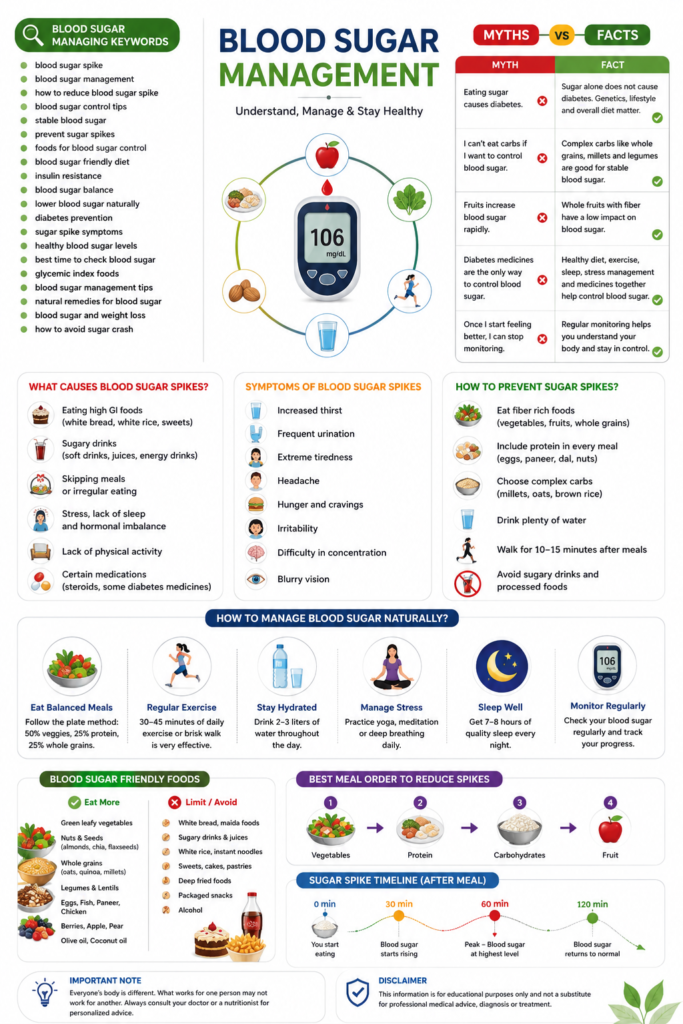
For an individual without diabetes, blood sugar typically peaks around one hour after a meal and should ideally stay under 140 mg/dL, returning to pre-meal levels (usually under 100–120 mg/dL) within two hours.
2. How long does a typical sugar spike last?
In a healthy metabolic system, a glucose spike usually peaks within 45 to 60 minutes after eating and settles back down to normal levels within 2 hours. If your levels remain elevated after 2 to 3 hours, your body may be struggling with insulin sensitivity.
3. Does drinking apple cider vinegar really help reduce sugar spikes?
Some clinical studies suggest that consuming 1–2 tablespoons of diluted apple cider vinegar right before a carbohydrate-rich meal can slightly improve insulin sensitivity and slow down gastric emptying, reducing the severity of the spike. However, it is a supportive tool, not a magic cure.
4. Can stress raise my blood sugar even if I haven’t eaten carbs?
Yes. When you are stressed, your body releases cortisol and adrenaline. These hormones signal your liver to break down stored glycogen into glucose and release it into the bloodstream to prepare your body for physical action, spiking your blood sugar without any food intake.
5. Are Ayurvedic herbs safe to take with standard diabetes medications?
Some Ayurvedic herbs (like Gudmar or Karela) have natural blood-sugar-lowering effects. If taken alongside prescription medications like Metformin or Insulin, they can cause blood sugar levels to drop too low (hypoglycemia). Always discuss any herbal supplements with your prescribing doctor first.
Wrapping It Up
Blood sugar spikes are a natural biological response to food, but frequent, sharp surges can leave you feeling chronically exhausted, unfocused, and at risk for long-term metabolic issues.
Keeping your blood sugar balanced doesn’t require extreme restriction. By shifting your food order, pairing carbohydrates with protein and healthy fats, staying active throughout the day, and incorporating traditional Ayurvedic principles like mindful eating and natural herbal support, you can maintain steady energy and support your long-term health. Small, sustainable daily habits make all the difference.
Take Charge of Your Wellness Journey
Looking for authentic, expert-backed wellness insights? Explore our blog for practical guides on digestion, Ayurvedic nutrition, stress management, and holistic health. If you’re considering adding Ayurvedic formulations or herbal extracts to your daily routine, choose transparent, high-quality sources and always consult a qualified healthcare practitioner to find the right approach for your unique body. Your path to steady energy and vitality starts with mindful everyday