
What Is Digestion?
Digestion is the natural process by which your body breaks down food into nutrients that it can absorb and use.
Think of your digestive system as a food-processing journey. From the moment you take your first bite until nutrients reach your bloodstream, several organs work together to ensure your body gets the fuel it needs.
This journey doesn’t happen instantly. Depending on the type of food you eat, digestion can take anywhere from several hours to more than a day.
Foods rich in fibre usually move through the digestive system more steadily, while meals that are high in fat may take longer to digest.
Every meal you eat follows the same basic path:
- Food enters your mouth.
- It travels through the food pipe (esophagus).
- It reaches the stomach.
- Digestion continues in the small intestine.
- Nutrients are absorbed into the bloodstream.
- The remaining waste moves to the large intestine before leaving the body.
Each step is important. If one part of this process slows down or becomes disrupted, you may experience digestive discomfort.
How Digestion Works: A Complete Guide to Better Digestive Health Naturally
Introduction
Have you ever enjoyed your favourite meal only to feel bloated, heavy, or uncomfortable afterward? Or maybe you’ve experienced frequent gas, acidity, or constipation without knowing why. These everyday digestive issues are more common than many people realize, and in many cases, they begin with how your digestive system is functioning.
Your digestive system does much more than simply break down food. It transforms the meals you eat into the nutrients your body needs for energy, growth, tissue repair, and overall wellness. Every organ involved in digestion works together like a well-organized team. When everything functions smoothly, you feel energetic, comfortable, and nourished. But when digestion slows down or becomes inefficient, it can affect your daily life in many ways.
Many people focus only on what they eat, but healthy digestion also depends on how you eat, your activity levels, hydration, sleep, stress management, and overall lifestyle. Even nutritious foods may not provide their full benefits if your digestive system isn’t working efficiently.
Traditional Ayurveda has long recognized the importance of strong digestion. Rather than focusing on individual symptoms alone, Ayurveda emphasizes supporting the body’s natural digestive strength, often referred to as Agni, which is considered the foundation of overall wellness.
In this guide, you’ll learn how digestion works, why it matters, common causes of digestive discomfort, and simple habits that may help support healthy digestion naturally.
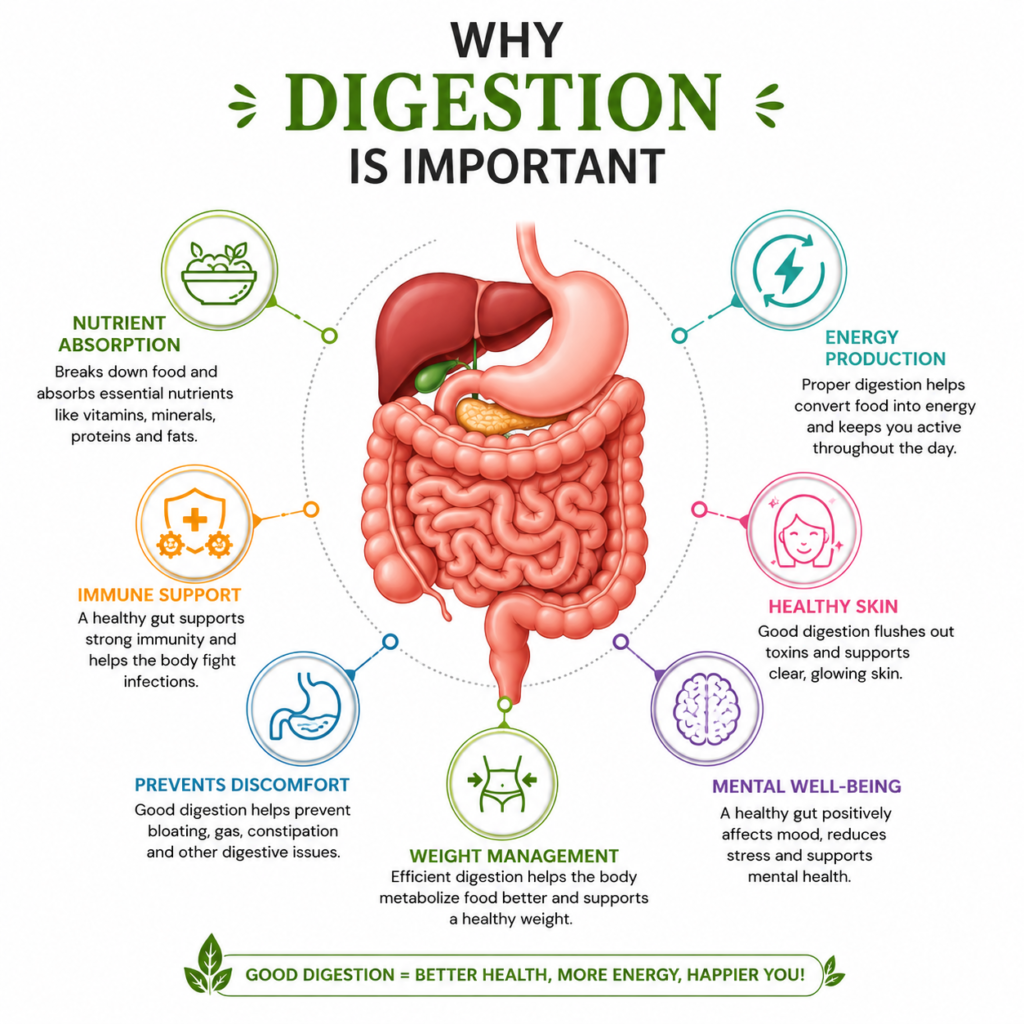
Why Is Digestion So Important?
Most people think digestion is simply about breaking down food. In reality, it is one of your body’s most essential processes.
Every bite you take contains nutrients such as carbohydrates, proteins, fats, vitamins, minerals, and water. Your body cannot use these nutrients until they are properly broken down into smaller molecules that can be absorbed into the bloodstream.
These nutrients help support:
- Daily energy production
- Muscle growth and repair
- Brain function
- Healthy immunity
- Hormonal balance
- Bone health
- Skin and hair wellness
- Overall metabolism
When digestion isn’t working efficiently, your body may struggle to absorb these nutrients properly, even if you’re eating a balanced diet. This is why digestive health plays such an important role in supporting overall well-being.
How Your Digestive System Works: Step by Step
Let’s take a closer look at what happens after you eat.
Step 1: Digestion Begins in the Mouth
Digestion actually starts before food reaches your stomach.
As you chew, your teeth break food into smaller pieces, making it easier to digest. At the same time, your saliva mixes with the food.
Saliva contains natural enzymes that begin breaking down carbohydrates into simpler sugars. This is why experts often recommend chewing your food slowly instead of swallowing large bites.
Chewing thoroughly gives your digestive system a better start.
Step 2: The Esophagus Carries Food to the Stomach
Once you swallow, food travels down a muscular tube called the esophagus.
Special muscle movements, known as peristalsis, gently push food toward your stomach. You don’t have to think about these movements—they happen automatically.
A small valve at the bottom of the esophagus opens to allow food into the stomach and then closes again. This helps prevent stomach acid from flowing back upward.
If this valve becomes weak or doesn’t close properly, stomach acid may move into the esophagus, leading to symptoms commonly associated with acid reflux or heartburn.
Step 3: The Stomach Breaks Food Down Further
Your stomach acts like a natural mixing chamber.
It combines food with digestive juices and stomach acid, helping break proteins into smaller components while also reducing the number of harmful microorganisms that may be present in food.
Powerful muscles in the stomach gently churn the food, creating a semi-liquid mixture that gradually moves into the small intestine.
Contrary to popular belief, not all digestion happens in the stomach. It mainly prepares food for the next stage, where most nutrient absorption takes place.
Step 4: The Small Intestine Does Most of the Work
The small intestine is where the majority of digestion and nutrient absorption occurs.
Here, digestive enzymes from the pancreas and bile from the liver work together to break down carbohydrates, proteins, and fats into smaller molecules.
The inner lining of the small intestine contains millions of tiny finger-like structures called villi. These increase the surface area available for absorbing nutrients.
Once absorbed, nutrients enter the bloodstream and are transported throughout the body, where they help support energy production, tissue repair, and normal body functions.
This stage is essential because it allows your body to make use of the food you’ve eaten.
Step 5: The Large Intestine Completes the Journey
After most nutrients have been absorbed, the remaining material moves into the large intestine.
Its main roles include:
- Absorbing water
- Supporting normal bowel movements
- Helping maintain electrolyte balance
- Working with beneficial gut bacteria that support digestive health
The gut microbiome—a community of helpful microorganisms living in your intestines—plays an important role in digestion and overall wellness. A balanced gut microbiome may help support normal digestion and contribute to overall health.
Finally, the remaining waste is stored in the rectum before leaving the body during a bowel movement.
Why Healthy Digestion Matters Every Day
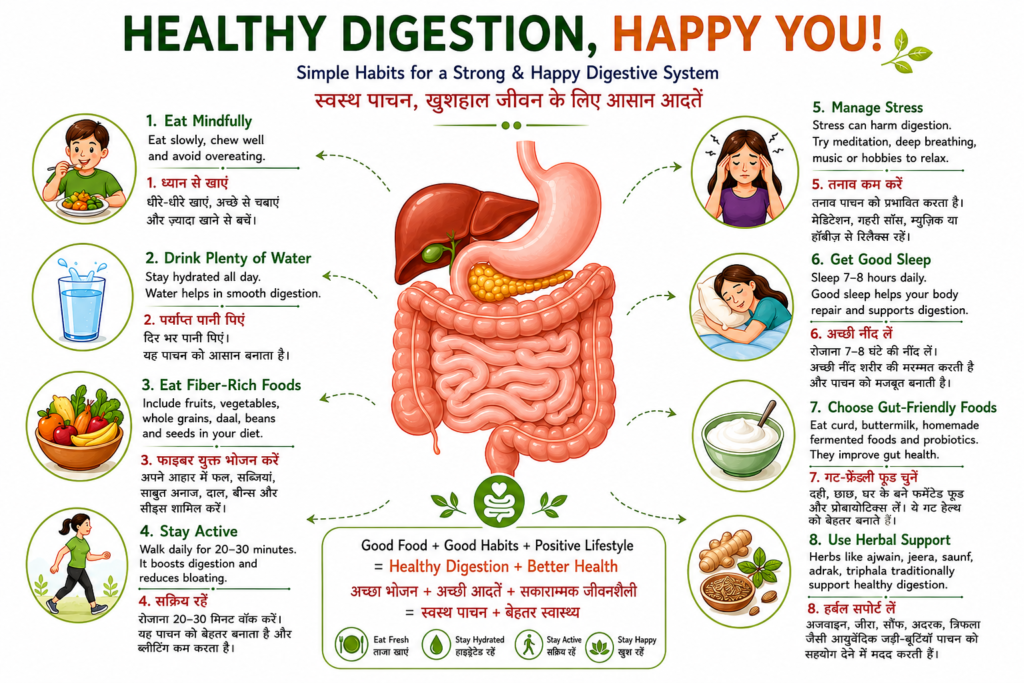
When your digestive system functions well, you often notice benefits beyond your stomach.
Healthy digestion may help support:
- Steady energy throughout the day
- Comfortable digestion after meals
- Better nutrient absorption
- Regular bowel movements
- Reduced feelings of bloating after eating
- Overall gut wellness
- Normal metabolism
- Better quality of life
On the other hand, poor digestion may leave you feeling sluggish, uncomfortable, or less able to enjoy your daily routine.
Why Do Digestive Problems Happen?
Have you ever wondered why your stomach feels perfectly fine one day but uncomfortable the next? You might eat similar meals, yet sometimes you experience bloating, acidity, or constipation without an obvious reason.
The truth is that digestion depends on much more than the food on your plate. Your daily routine, stress levels, sleep quality, hydration, physical activity, and eating habits all influence how well your digestive system works.
Modern lifestyles often involve rushed meals, long hours of sitting, processed foods, and irregular sleep schedules. Over time, these habits may slow down digestion and make your digestive system work harder than it should.
The good news is that understanding these causes is the first step toward supporting better digestive health naturally.
Common Causes of Poor Digestion
1. Eating Too Fast
Many people finish an entire meal in less than ten minutes.
When you eat quickly, your stomach receives large pieces of food that require more effort to digest. You also tend to swallow extra air, which may contribute to bloating and discomfort.
Eating slowly allows your saliva to begin breaking down food properly before it reaches your stomach.
Simple Tip
Try chewing each bite thoroughly and put your spoon or fork down between bites. Even slowing your meal by a few minutes can make a noticeable difference.
2. Eating Large Meals
It’s natural to enjoy a feast during festivals or celebrations. However, regularly eating very large portions can place extra pressure on your digestive system.
A heavy meal takes longer to digest and may leave you feeling:
- Uncomfortably full
- Bloated
- Sleepy after eating
- Sluggish
- Heavy in the stomach
Instead of eating until you’re overly full, try stopping when you feel comfortably satisfied.
3. Eating Too Many Processed Foods
Convenience foods often contain refined flour, added sugars, unhealthy fats, and lower amounts of dietary fibre.
Examples include:
- Chips
- Instant noodles
- Packaged snacks
- Sugary cereals
- Bakery products
- Soft drinks
Eating these foods regularly may not provide the fibre your digestive system needs to support normal bowel movements and gut health.
Whenever possible, choose fresh, home-cooked meals made with whole ingredients.
4. Not Drinking Enough Water
Water plays an important role in digestion.
It helps soften food, supports nutrient absorption, and keeps waste moving smoothly through the intestines.
Not drinking enough fluids may contribute to:
- Constipation
- Hard stools
- Dry mouth
- Sluggish digestion
Aim to drink water consistently throughout the day instead of waiting until you feel thirsty.
5. Low Fiber Intake
Fiber acts like a natural helper for your digestive system.
It adds bulk to stool, supports regular bowel movements, and nourishes beneficial bacteria in the gut.
Good sources of dietary fibre include:
- Fruits
- Vegetables
- Whole grains
- Oats
- Lentils
- Beans
- Seeds
- Nuts
Many people consume far less fibre than recommended because refined foods have become a larger part of modern diets.
6. Sitting All Day
Your digestive system benefits from movement.
Long periods of sitting may slow normal bowel activity and contribute to feelings of heaviness after meals.
Even a short walk after eating may help support normal digestion.
Regular physical activity also supports overall digestive wellness and metabolism.
7. High Stress Levels
Your brain and digestive system constantly communicate with each other.
When you’re under stress, your body focuses more on dealing with the stressful situation than on digesting food efficiently.
You may notice digestive discomfort during periods of:
- Work pressure
- Exams
- Family responsibilities
- Financial stress
- Poor emotional well-being
Stress doesn’t only affect your mind—it may also influence how your digestive system functions.
8. Poor Sleep
Sleep gives your body time to recover, including your digestive system.
Irregular sleep schedules or consistently getting too little sleep may affect appetite, digestion, and overall metabolic health.
Creating a relaxing bedtime routine may help support both better sleep and digestive wellness.
Signs Your Digestion May Need Support
Digestive discomfort doesn’t always appear suddenly. Your body often gives small signals before larger problems develop.
Recognizing these signs early allows you to make healthier lifestyle choices.
Some common signs include:
Frequent Bloating
Feeling as though your stomach is swollen or tight after meals.
Occasional bloating is common, but frequent bloating may suggest your digestion could benefit from some support.
Gas
Passing gas is completely normal.
However, excessive gas, especially after certain foods, may indicate that your digestive system is struggling to break food down efficiently.
Acidity or Heartburn
A burning sensation in the chest or throat after eating may occur when stomach contents move upward into the food pipe.
Certain foods, large meals, or lying down immediately after eating may increase the likelihood of this discomfort.
Constipation
Constipation generally refers to infrequent bowel movements or difficulty passing stools.
Common contributing factors include:
- Low fibre intake
- Inadequate hydration
- Lack of physical activity
- Changes in routine
Supporting healthy digestion through balanced eating and regular movement may help maintain normal bowel habits.
Loose Stools
Occasional loose stools can happen for many reasons, including dietary changes or temporary digestive upset.
If they become frequent or persistent, it’s important to seek medical advice.
Feeling Heavy After Meals
Do you often feel like taking a nap immediately after lunch?
A heavy feeling after meals may occur when your digestive system is working harder than usual.
Choosing balanced meals and avoiding overeating may help you feel lighter afterward.
Loss of Appetite
Sometimes poor digestion may reduce your desire to eat.
If a reduced appetite continues for a long period or is accompanied by unexplained weight loss, consult a healthcare professional.
Foods That May Affect Digestion
Not every food affects everyone in the same way.
However, some foods are more commonly associated with digestive discomfort when eaten in excess.
Highly Processed Foods
Examples include:
- Packaged chips
- Instant noodles
- Processed meats
- Frozen ready meals
These foods are often lower in fiber and may not support optimal digestive health.
Fried Foods
Deep-fried foods tend to contain higher amounts of fat, which can take longer to digest.
Eating large portions may leave some people feeling heavy or uncomfortable.
Sugary Foods
Cakes, pastries, candies, and sugary drinks may provide quick energy but often contribute little fiber or nutritional value.
Moderation is key as part of a balanced diet.
Carbonated Drinks
Soft drinks and fizzy beverages introduce extra gas into the digestive system, which may contribute to bloating in some individuals.
Excessively Spicy Foods
Spicy foods don’t affect everyone the same way.
For some people, they may trigger digestive discomfort or heartburn, especially when eaten in large amounts.
Too Much Alcohol
Drinking excessive amounts of alcohol may irritate the digestive tract and affect normal digestion.
If you drink alcohol, moderation is important.
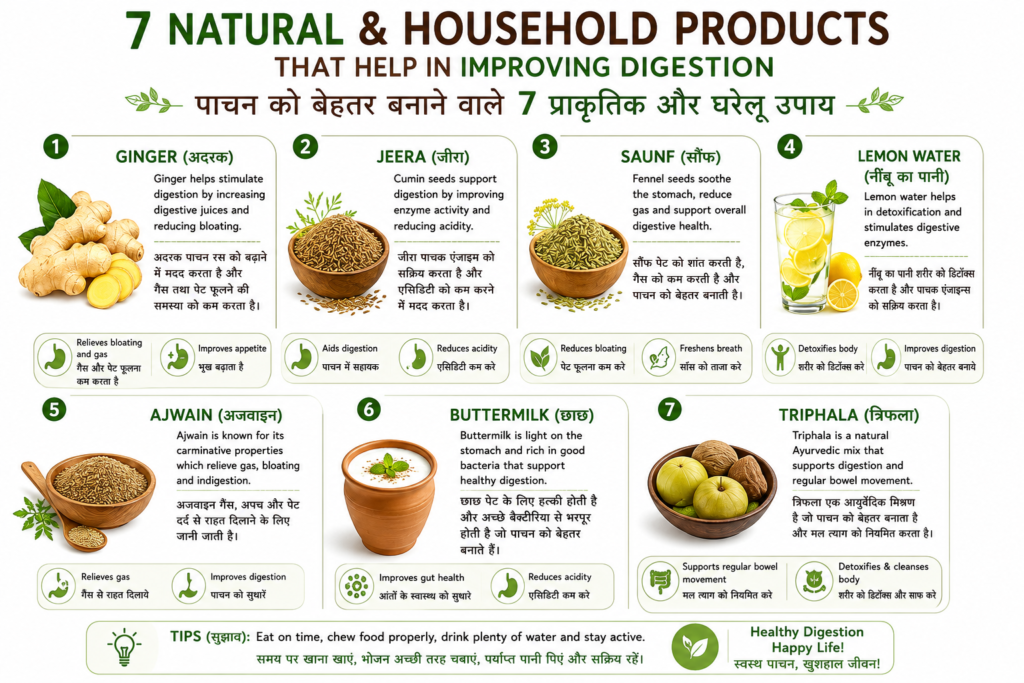
Foods That May Help Support Healthy Digestion
Supporting digestion doesn’t require expensive supplements or restrictive diets.
Simple, everyday foods can make a meaningful difference.
Fresh Fruits
Many fruits naturally provide water, vitamins, minerals, and dietary fibre.
Good choices include:
- Apples
- Papaya
- Pears
- Oranges
- Guava
- Kiwi
Enjoy whole fruits rather than fruit juices whenever possible, as whole fruits retain more fibre.
Vegetables
Vegetables are rich in fibre and nutrients that support overall wellness.
Aim to include a variety of colourful vegetables such as:
- Spinach
- Carrots
- Pumpkin
- Broccoli
- Cucumber
- Bottle gourd
- Beetroot
Whole Grains
Compared with refined grains, whole grains contain more fibre.
Examples include:
- Oats
- Brown rice
- Whole wheat
- Millets
- Barley
These foods may help support regular bowel movements as part of a balanced diet.
Lentils and Beans
Lentils and beans provide both plant-based protein and dietary fibre.
Including them regularly may help support digestive and overall health.
Yogurt
Plain yogurt containing live cultures may help support a balanced gut microbiome for many people.
Choose unsweetened varieties when possible.
Nuts and Seeds
Small portions of:
- Almonds
- Walnuts
- Chia seeds
- Flaxseeds
- Pumpkin seeds
can contribute healthy fats, fibre, and nutrients that support overall wellness.
Common Digestive Myths
Myth 1: Skipping Meals Helps Digestion
Fact: Skipping meals may leave you overly hungry later, increasing the chances of overeating. Eating balanced meals at regular times often supports a healthier digestive routine.
Myth 2: Drinking Water During Meals Stops Digestion
Fact: For most healthy individuals, moderate amounts of water during meals do not stop digestion. Water can help with swallowing and the movement of food through the digestive tract.
Myth 3: All Fatty Foods Are Bad
Fact: Healthy fats from foods such as nuts, seeds, avocados, and olive oil can be part of a balanced diet. It’s excessive intake of unhealthy fats that may contribute to digestive discomfort.
Myth 4: Everyone Needs the Same Diet
Fact: Digestion is highly individual. A food that suits one person may not suit another. Paying attention to your own body’s responses can help you make informed food choices.
Conclusion
Your digestive system works quietly every day, transforming the food you eat into the energy and nutrients your body needs to thrive. When digestion is functioning well, you often feel lighter, more energetic, and better prepared to enjoy daily life. But when it becomes sluggish or uncomfortable, even simple activities can feel more challenging.
The encouraging news is that supporting digestive health doesn’t usually require dramatic changes. Choosing balanced meals, eating mindfully, drinking enough water, staying physically active, managing stress, and getting quality sleep can all contribute to healthier digestion over time.
Traditional Ayurveda also highlights the importance of maintaining strong digestion through balanced eating habits, regular routines, and herbs that have been traditionally used to support digestive wellness. When combined with modern healthy lifestyle practices, these approaches may help support your body’s natural digestive processes.
Remember, every person’s digestive system is different. Listen to your body, make gradual improvements, and seek professional medical advice whenever symptoms are persistent or concerning.
Healthy digestion is not about perfection it’s about making sustainable choices that support your overall well-being every day.