
Ayurvedic Joint Pain Oil
Joint pain is something almost everyone deals with at some point. It’s usually linked with aging, but plenty of younger people feel it too thanks to long hours at a desk, poor posture, sports injuries, extra weight, or simply not moving enough during the day. Sometimes it shows up as a bit of stiffness after waking up. Other times it lingers and starts to get in the way of ordinary things like walking, bending, or climbing stairs.
More people are now looking at natural, lifestyle-based ways to support their joints, alongside whatever their routine already includes. That’s part of why Ayurvedic joint pain oil keeps coming up in these conversations. In Ayurveda, it’s used to support comfort, flexibility, and everyday mobility — not as a fix for one symptom, but as one piece of a bigger picture that includes diet, movement, and daily habits.
Herbal oils have been part of Ayurvedic self-care for a very long time. Most are made using herbs that are traditionally associated with the muscles, joints, and circulation, and they’re meant to be massaged in — not just applied and left. The massage itself is part of the practice.
This guide walks through what joint pain actually is, why it happens, how Ayurveda looks at it, and where an oil like this might fit into your routine.
What Is Joint Pain?
A joint is simply the point where two bones meet, and it’s what lets your body bend, twist, and move. Joint pain is the discomfort, stiffness, or soreness that shows up around these points — most often in the knees, shoulders, hips, wrists, elbows, ankles, or fingers.
It can come and go after a hard workout, or it can build up slowly over months and years. Some days it’s barely noticeable. Other days it makes getting off the couch feel like a project.
It helps to remember that joint pain isn’t a disease on its own — it’s a symptom. Something else is usually driving it, and figuring out what that is makes a real difference in how you approach care.
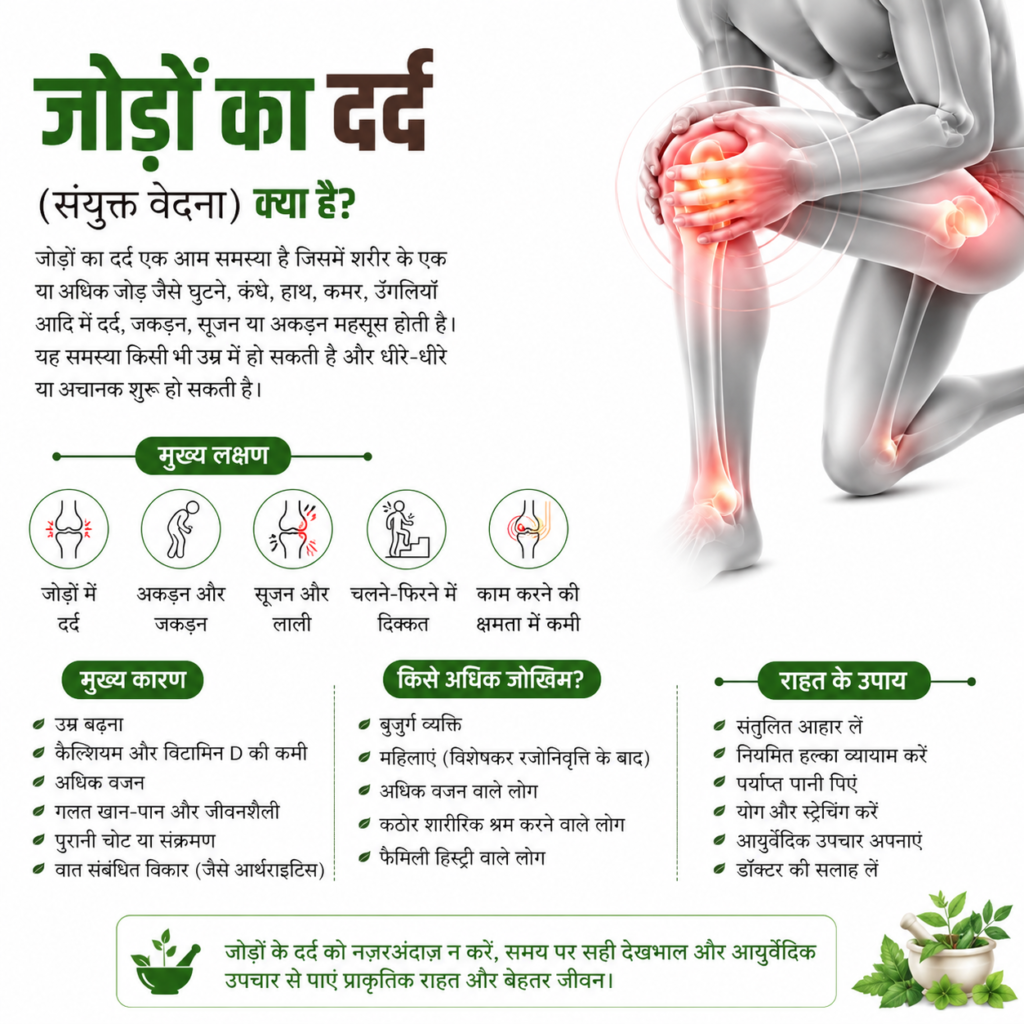
Causes behind this
A few common things tend to be behind joint discomfort:
Getting older
The natural cushioning in your joints changes with age, which often shows up as stiffness.
Overuse
Repetitive movement, a sport, or a workout routine puts steady stress on joints over time.
Injury
Sprains, strains, and fractures can leave joints achy long after the injury itself has healed.
Carrying extra weight
More weight cause pressure on the knees and hips.
Sitting badly for long stretches
Bad posture throws off your muscle balance, and your joints end up compensating.
Balanced Diet
Bones and muscles need proper nutrition to stay in good shape — skimp on that, and joints can feel it.
Less movement
A sedentary day-to-day life tends to stiffen things up and reduce flexibility over time.
Signs
Joint discomfort doesn’t look the same for everyone, but here’s what tends to show up:
- Stiffness in the joint
- Ongoing or occasional discomfort
- Swelling
- A smaller range of motion than usual
- Trouble walking or using stairs
- Stiffness that’s worse in the morning
- Tight muscles around the joint
- Soreness when you move
- A clicking or grinding feeling
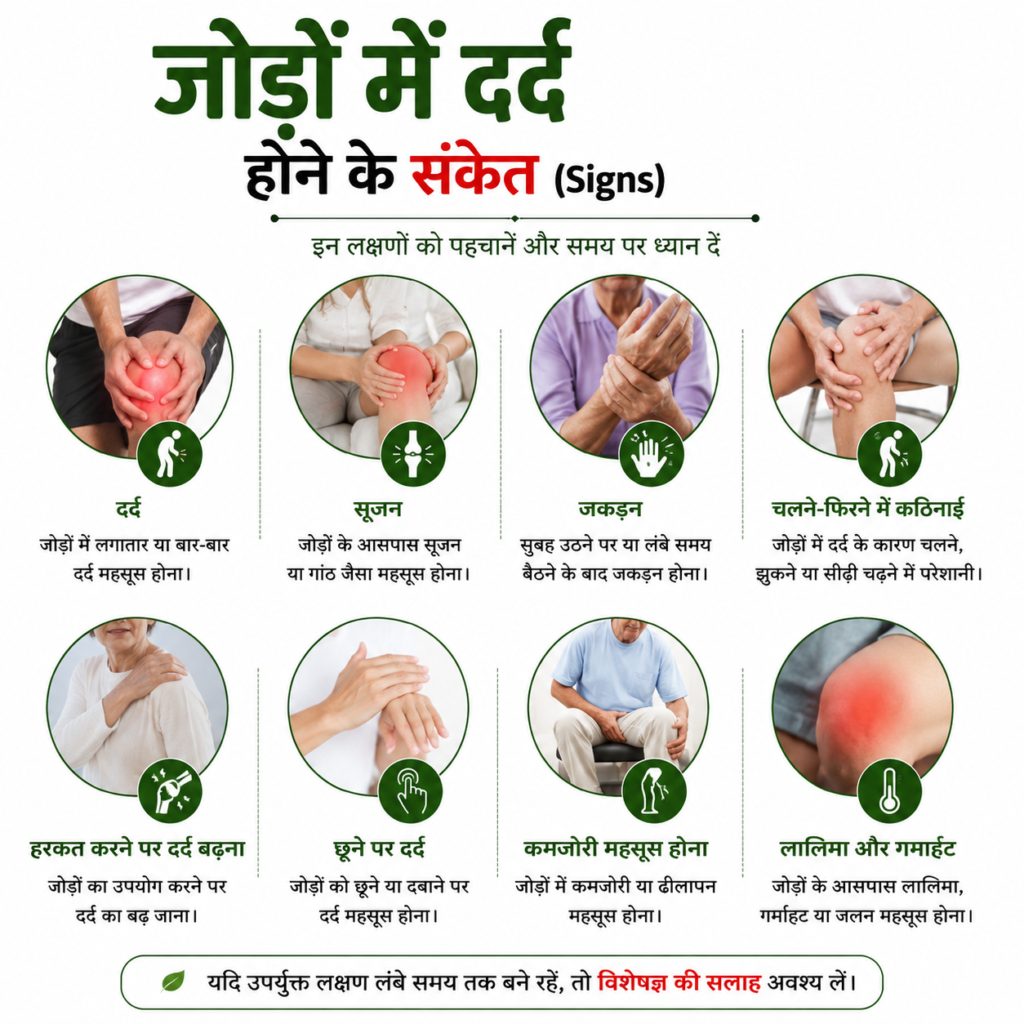
If the pain comes on suddenly, is severe, comes with fever or heavy swelling, or follows a serious injury, that’s a sign to see a doctor rather than wait it out.
How Ayurveda Looks at Joint Pain
Ayurveda explains the body through three doshas — Vata, Pitta, and Kapha — and joint health is closely tied to Vata. Vata governs movement throughout the body, so when it’s out of balance, the result is often dryness, stiffness, and reduced flexibility. This pattern has a name in Ayurveda: Sandhivata.
Rather than zeroing in on one symptom, Ayurveda takes a wider view of what might help, including:
- Diet
- Daily routine
- Movement and exercise
- Adjusting habits with the seasons
- Managing stress
- Herbal support
- Oil massage, known as Abhyanga
The idea is that supporting the whole system tends to help more than treating one part in isolation.
Ingredients used in Ayurvedic Joint Pain Oil?
This is a herbal oil made from plant-based ingredients blended into a nourishing base oil — usually sesame or coconut. It’s meant to be massaged into the skin, and the massage itself is just as much a part of the practice as the oil.
Depending on the brand or formulation, you’ll typically find some combination of these herbs:
Nirgundi — used traditionally to support joint comfort and easier movement.
Shallaki — valued in Ayurveda for supporting joint function and flexibility.
Ashwagandha — known for supporting muscle strength and overall vitality.
Eranda (Castor) — used in Ayurvedic massage to support flexibility.
Camphor — brings a cooling feeling that a lot of people find genuinely soothing.
Sesame oil — the classic Ayurvedic base oil, good for the skin and for massage.
Support
Used regularly, alongside proper massage, this kind of oil is traditionally thought to support:
- Everyday joint comfort
- Better mobility
- Relaxed muscles
- Easier, more flexible movement
- Healthy circulation while massaging
- General physical wellness
Not everyone responds the same way, and it’s worth being upfront about that. An Ayurvedic oil is a support tool, not a substitute for medical treatment when that’s actually needed.
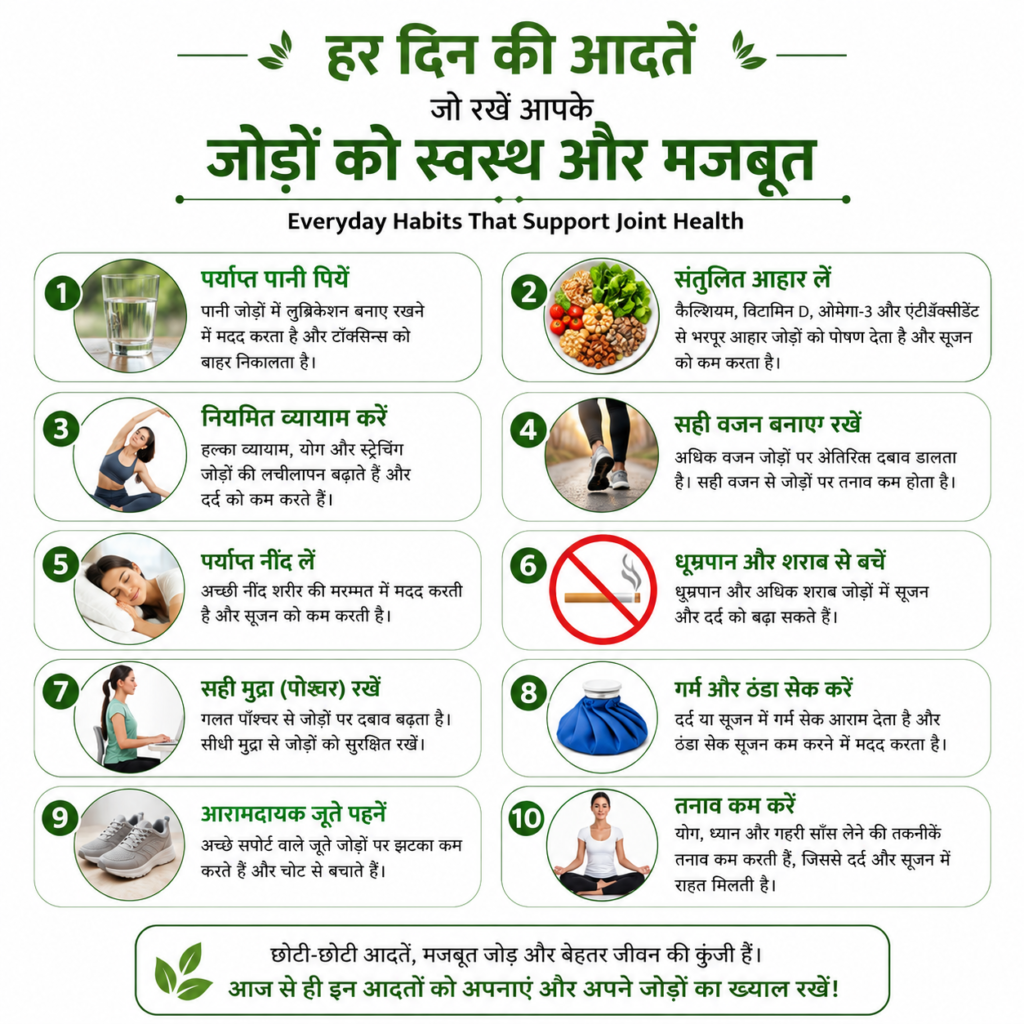
Everyday Habits That Support Joint Health
Oil and massage are only part of the picture. What you do the rest of the day matters just as much.
- Regular Movement
Regular movement keeps joints flexible and muscles strong.
- Balanced Weight
Less weight on the knees, hips, and ankles means less daily wear.
- Proper Hydration
Hydration supports the whole body, joints included.
- Balanced Diet
Fresh vegetables, seasonal fruit, whole grains, lentils, nuts, seeds, healthy fats, and calcium-rich foods (if they suit you) all help.
- Healthy Meals
Warm, freshly cooked food is preferred in Ayurveda for keeping digestion steady.
- Sleep Schedule
Your body does a lot of its repair work while you’re asleep.
- Less load
Stress tends to show up as tight muscles, so relaxation and mindfulness aren’t just extras — they help the joints too.
- Yoga and Movement Worth Trying
Regular movement keeps joints flexible and muscles doing their job. If you’re new to yoga, or already dealing with joint pain, start slow and check in with an instructor.
Tadasana (Mountain Pose) — helps with posture and alignment.
Bhujangasana (Cobra Pose) — opens up the back and shoulders.
Cat-Cow Stretch — gets the spine moving gently.
Trikonasana (Triangle Pose) — builds flexibility and balance.
Walking — still one of the easiest, most reliable ways to support your joints.
Swimming — lets you move without loading up your joints.
Stretching — a few minutes daily goes a long way toward reducing stiffness.
How to use
Ayurvedic joint pain oil is generally gentle, but a bit of care goes a long way:
- Patch test it before using it properly for the first time.
- Don’t apply it to broken or infected skin.
- Keep it away from your eyes and mouth.
- Store it somewhere cool and dry, out of children’s reach.
- If you’re pregnant or breastfeeding, check with a doctor first.
- If you have known allergies, read the ingredient list carefully.
- See a doctor if the pain is severe, doesn’t go away, or comes with swelling, fever, or a recent injury.
Frequently Asked Questions (FAQ)
Can I use it every day? Most people use Ayurvedic oils as a regular part of self-massage. Stick to the label instructions, and check with a professional if you have specific health concerns.
Is it only for older people? Not at all. Joint discomfort shows up at different ages, and a suitable oil can be used by adults across age groups, following the product directions.
How do I actually apply it? Take a small amount, rub it into the sore area, and massage gently for a few minutes. Slightly warmed oil tends to feel better and absorb more easily.
Will it cure arthritis? No and it shouldn’t be treated that way. It’s meant to support comfort and mobility, not to replace medical treatment. Anyone with arthritis should follow their doctor’s guidance.
How soon will I notice a difference? That varies a lot from person to person, depending on lifestyle, activity levels, and the specific product.
Can I use it after a workout? Yes, plenty of people apply it post-exercise as part of winding down and recovering.
Conclusion
Healthy joints matter more than most people realize — they’re what keep you active and independent. Some stiffness now and then is normal, but small daily habits add up to a real difference over time.
Ayurvedic joint pain oil has a long history in self-massage practices meant to support comfort, flexibility, and mobility. Paired with regular movement, decent food, better posture, enough sleep, and a healthy weight, it can be a useful part of an overall approach to joint care.
It’s not a replacement for medical attention when something is seriously wrong. If pain is constant, severe, or comes with real swelling or trouble moving, talk to a doctor.
Bringing traditional Ayurvedic care together with sensible everyday habits is still one of the more grounded ways to look after your joints for the long run.