
The Effects of Mobile Phone Use Before Bed on Sleep
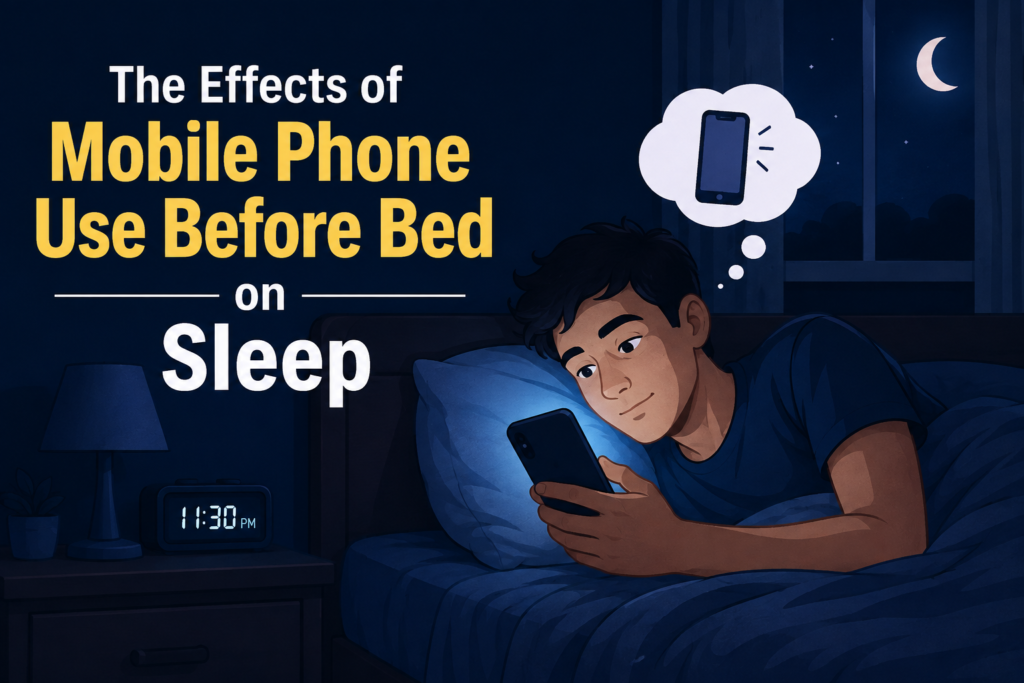
For many of us, using a mobile phone before going to bed has become a daily habit. Some people scroll through social media, reply to messages, watch videos, play games, or read the news before falling asleep. It may feel like a relaxing way to end the day, but spending too much time on your phone at night can affect how well you sleep.
Quality sleep is one of the most important parts of a healthy lifestyle. It allows the body and mind to recover after a busy day and prepares you for the next one. When sleep is disturbed regularly, it may affect your energy levels, mood, concentration, and overall well-being.
The good news is that a few simple changes to your nighttime routine can make a noticeable difference. In this article, we’ll explore how mobile phones can influence sleep, who may be more affected, and practical ways to develop healthier bedtime habits. We’ll also look at some traditional Ayurvedic lifestyle practices that may help support restful sleep.
Why Is Sleep So Important?
Sleep is much more than simply resting. While you sleep, your body carries out many important functions that help keep you healthy.
A good night’s sleep may help support:
- Better memory and learning
- Physical recovery after daily activities
- Healthy hormone balance
- Normal immune function
- Improved mood and emotional well-being
- Better focus and productivity
- Overall health and wellness
On the other hand, poor sleep over a long period may leave you feeling tired, less productive, and unable to concentrate throughout the day.
How Mobile Phones Can Affect Your Sleep
Although smartphones make our lives easier, using them right before bed can sometimes interfere with healthy sleep.
1. Blue Light Exposure
Smartphone screens produce blue light. During the evening, this light may reduce the body’s natural production of melatonin, a hormone that helps regulate the sleep-wake cycle.
When melatonin production is delayed, you may find it harder to fall asleep or feel sleepy at your usual bedtime.
2. Your Brain Stays Active
Your body needs time to relax before sleep. However, watching entertaining videos, reading exciting news, checking emails, or playing games keeps your brain engaged instead of helping it unwind.
Even after putting the phone away, your mind may continue processing the information you’ve just seen.
3. Social Media Can Increase Stress
Scrolling through social media before bedtime can sometimes create emotional stress. Reading upsetting news, comparing yourself with others, or responding to work messages late at night may make it difficult to relax.
Stress and anxiety are common reasons why people struggle to fall asleep.
4. Losing Track of Time
Many people pick up their phone thinking they’ll use it for only a few minutes. Before they realize it, an hour has passed.
This habit reduces total sleep time, especially for people who already have busy schedules.
5. Nighttime Notifications
Notifications, calls, or message alerts can interrupt sleep even after you’ve fallen asleep.
Frequent interruptions may reduce deep sleep, which is important for feeling refreshed the next morning.
Signs Your Phone May Be Affecting Your Sleep
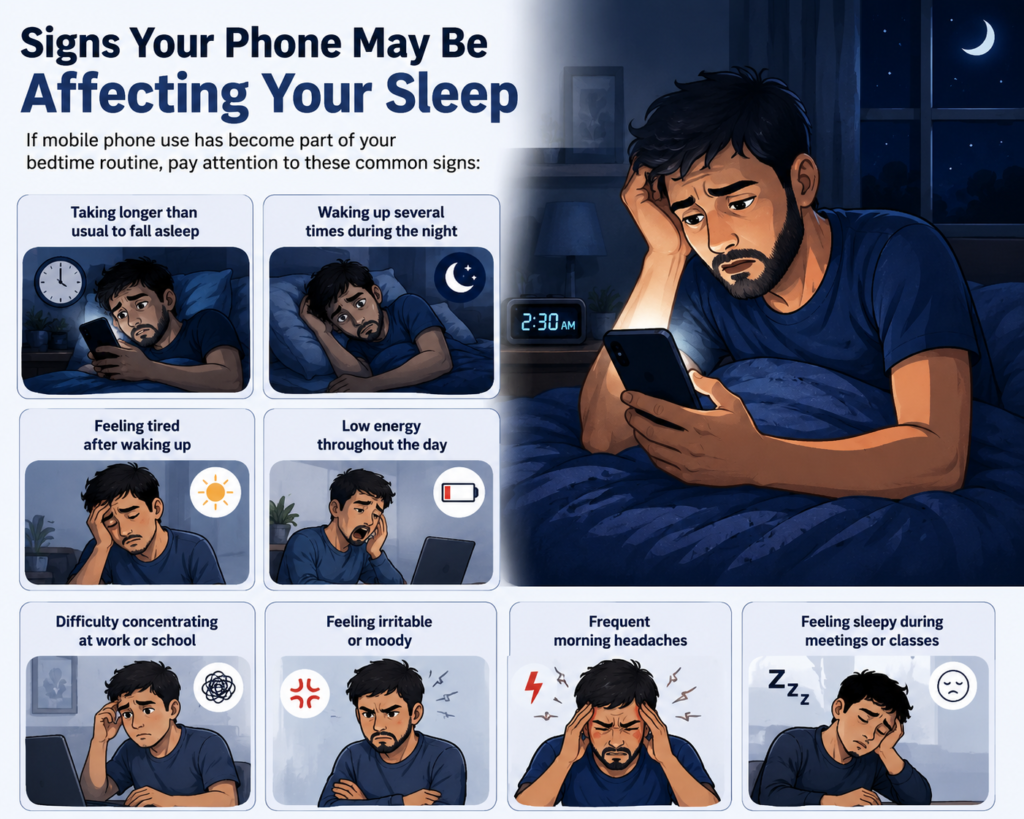
If mobile phone use has become part of your bedtime routine, pay attention to these common signs:
- Taking longer than usual to fall asleep
- Waking up several times during the night
- Feeling tired after waking up
- Low energy throughout the day
- Difficulty concentrating at work or school
- Feeling irritable or moody
- Frequent morning headaches
- Feeling sleepy during meetings or classes
Experiencing these symptoms occasionally is common, but if they happen regularly, it may be worth reviewing your nighttime habits.
Who Is Most Likely to Be Affected?
Although anyone can experience sleep problems related to excessive screen time, some groups may be more vulnerable.
These include:
- Teenagers
- College students
- Office professionals
- Remote workers
- Gamers
- People with irregular work schedules
- Individuals experiencing stress or anxiety
People who spend many hours on digital devices during the day may also find it harder to disconnect at night.
Simple Tips to Reduce Mobile Phone Use Before Bed
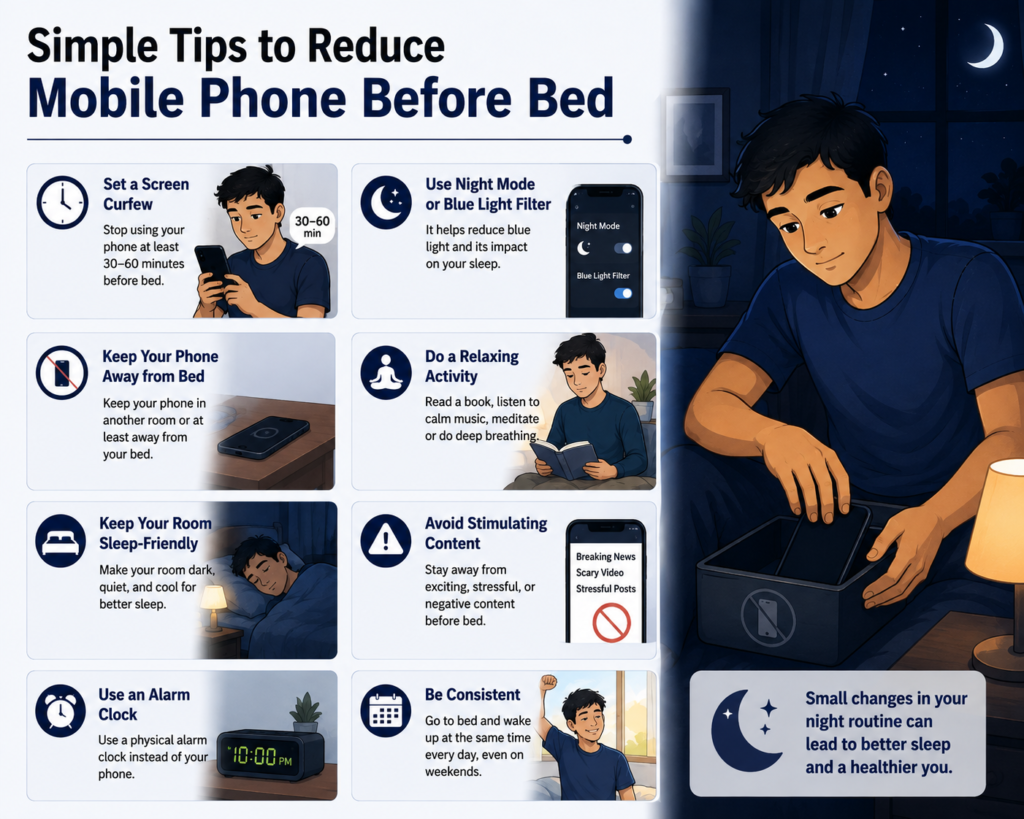
Improving sleep doesn’t necessarily mean giving up your phone completely. Instead, aim to create healthier boundaries.
Create a Screen-Free Bedtime
Try to stop using your phone at least 30 to 60 minutes before sleeping. This gives your brain time to relax naturally.
Use Night Mode
Most smartphones include a Night Mode or Blue Light Filter.
While it may not completely prevent sleep disruption, reducing blue light during the evening may be helpful.
Charge Your Phone Away from the Bed
Keeping your phone on a desk instead of your bedside table reduces the temptation to check notifications during the night.
Using a traditional alarm clock instead of your phone can also help.
Turn On “Do Not Disturb”
Silent notifications reduce unnecessary interruptions and create a calmer sleeping environment.
Replace Screen Time with Healthy Habits
Instead of scrolling through social media, try activities that naturally help your body relax.
Some ideas include:
- Reading a printed book
- Listening to soft instrumental music
- Practicing gentle stretching
- Meditation
- Deep breathing
- Writing in a journal
- Spending a few quiet minutes with family
Ayurveda’s Perspective on Better Sleep
According to Ayurveda, maintaining balance in daily life plays an important role in supporting healthy sleep and overall wellness.
Rather than focusing on a single habit, Ayurveda encourages a complete lifestyle that supports relaxation and natural body rhythms.
Traditional Ayurvedic practices include:
Follow a Regular Sleep Schedule
Sleeping and waking up at the same time every day may help support the body’s natural internal clock.
Create a Calm Evening Environment
Reducing noise, bright lights, and stimulating activities before bedtime may help prepare the mind for sleep.
Practice Abhyanga
Abhyanga, or gentle self-massage using suitable oils, has traditionally been used in Ayurveda as part of an evening wellness routine that may help support relaxation.
Practice Deep Breathing
Simple breathing exercises or meditation for just 5–10 minutes before bed may help calm the mind after a busy day.
Eat a Light Dinner
Ayurveda traditionally recommends eating lighter meals in the evening and allowing enough time for digestion before going to bed.
A Healthy Bedtime Routine You Can Follow
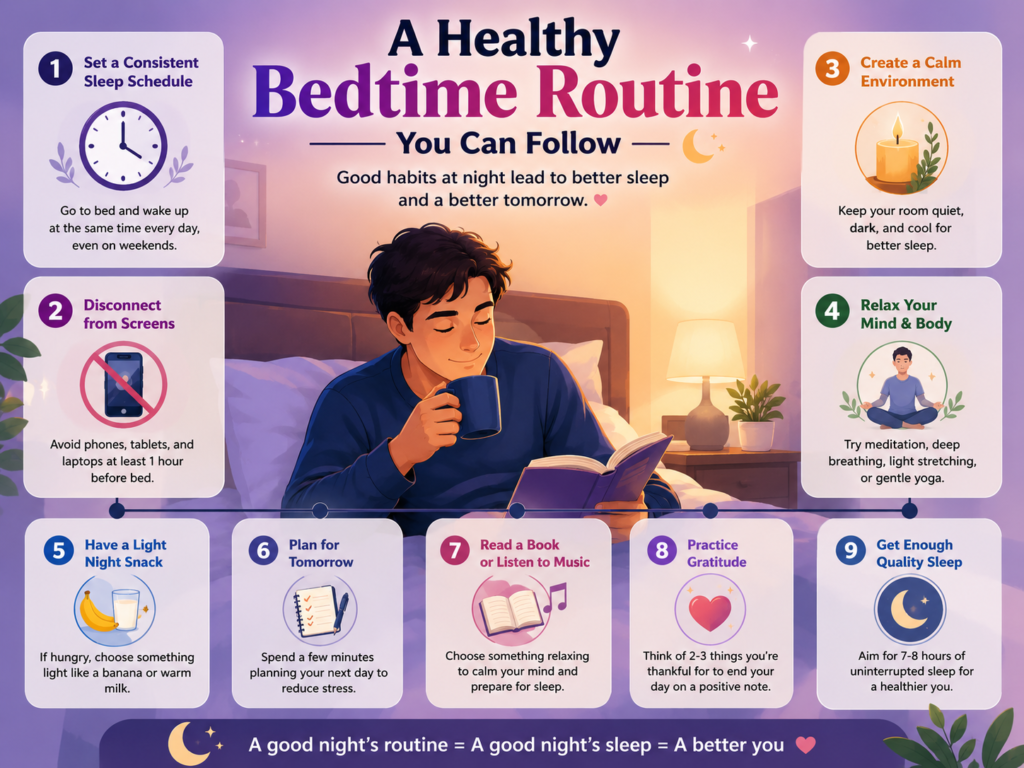
Building a consistent routine often leads to better sleep over time.
Here’s an example:
- Finish dinner at least 2–3 hours before bedtime.
- Reduce bright lighting in the evening.
- Put your mobile phone away 30–60 minutes before sleep.
- Read a book or practice meditation.
- Drink water if needed, but avoid excessive fluids before bed.
- Keep your bedroom cool, quiet, and comfortable.
- Go to bed at the same time every night.
Small habits practiced consistently often bring better long-term results than making major changes all at once.
Additional Lifestyle Tips for Better Sleep
Besides reducing screen time, these healthy habits may also support better sleep:
- Stay physically active during the day.
- Spend some time outdoors in natural sunlight.
- Limit caffeine during the evening.
- Avoid heavy meals close to bedtime.
- Reduce alcohol intake.
- Keep your bedroom dark and quiet.
- Maintain a comfortable room temperature.
- Follow a regular sleep schedule, even on weekends.
Frequently Asked Questions
Does using a mobile phone before bed affect sleep?
Yes, using a phone before bedtime may affect sleep quality by increasing mental stimulation, exposing the eyes to blue light, and delaying bedtime.
How long before bed should I stop using my phone?
Many sleep experts suggest limiting screen use for about 30–60 minutes before sleeping.
Is blue light the only reason screens affect sleep?
No. Besides blue light, notifications, engaging content, emotional stress, and prolonged screen use may also contribute to poor sleep.
Can Night Mode completely solve the problem?
Night Mode may reduce blue light exposure, but limiting overall screen time before bed is still considered a good sleep habit.
Can Ayurveda help support healthy sleep?
Ayurveda traditionally recommends a balanced daily routine, calming evening practices, mindful eating, and relaxation techniques that may help support restful sleep and overall wellness.
Conclusion
Using a mobile phone before bed has become a normal part of modern life, but excessive nighttime screen use may interfere with healthy sleep. Blue light exposure, mental stimulation, late-night scrolling, and constant notifications can all make it harder to get the restful sleep your body needs.
Fortunately, improving sleep often starts with small, consistent habits. Reducing screen time before bed, following a relaxing evening routine, staying physically active, and creating a comfortable sleep environment may all help support better sleep quality.
From an Ayurvedic perspective, maintaining a balanced lifestyle, eating mindfully, practicing relaxation techniques, and following a regular daily routine are traditional approaches that support overall wellness and restful sleep.
If you continue to experience persistent sleep problems despite making lifestyle changes, it’s a good idea to consult a qualified healthcare professional for appropriate evaluation and guidance.