
What is Panchakarma?
Panchakarma is a treatment program for the body, mind, and consciousness that cleanses and rejuvenates. It is based on Ayurvedic principles: Every human has a unique phenomenon manifested through the five basic elements of Ether, Air, Fire, Water, and Earth. The combination of these elements forms the three doshas (tridosha)—Vata, Pitta, and Kapha—and their balance is unique to each individual. When the doshic balance is disturb, it creates creates resulting in disease.
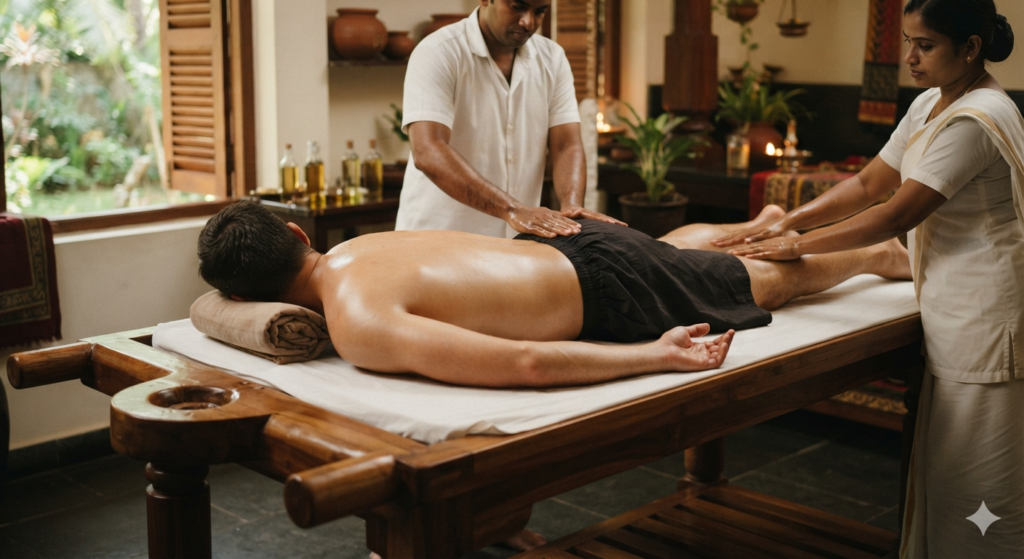
Panchakarma is done for one person with their specific constitution and specific disorder in mind, thus it requires close observation and supervision. Treatment starts with pre-purification measures of Snehan and Svedana, and then cleansing methods—Shodanas—are applied.
While modern detox trends focus on surface-level cleansing, Panchakarma works differently: it systematically removes ama (undigested toxic accumulation) from deep tissues while simultaneously strengthening agni—the digestive fire—giving you both detoxification and a metabolic reset your body truly needs.
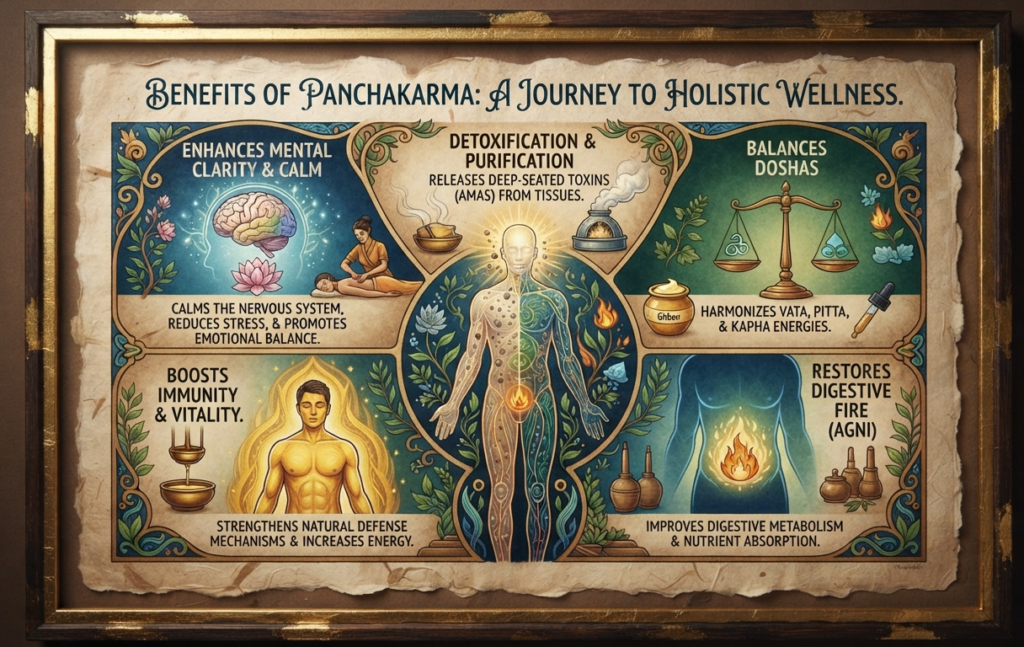
Benefits of Panchakarma
- Completely purifies the body
- Riddance of toxins
- Speeding up the metabolism
- Reducing Weight
- Enhancing the strength of digestive fire
- Opening up of blocked channels
- Relaxing the mind and body
- Rejuvenation of tissues
- Boost Immunity
- Relieves Stress
How Does Panchakarma Work?
Panchakarma is a traditional Ayurvedic system of therapies designed to support the body through a structured process of preparation, selected therapeutic procedures, and post-therapy care. In Ayurveda, it is traditionally associated with maintaining balance among the three doshas—Vata, Pitta, and Kapha.
It is important to understand that Panchakarma is not simply a modern “detox” program. Traditional Panchakarma is individualized and is generally performed under the guidance of a qualified Ayurvedic practitioner.
Origin of Panchakarma
Panchakarma is a holistic detoxification and rejuvenation therapy with roots in ancient India. It is the cornerstone of Kerala’s Ayurvedic medical heritage. In Sanskrit, “Panchakarma” means “five actions” and refers to the five steps of cleansing that are intended to rid the body of impurities and bring the doshas (Vata, Pitta, and Kapha) back into harmony. Panchakarma, which was created by ancient sages and doctors, is regarded as one of the most effective remedies. Since it can increase life expectancy, vigour, and beauty.
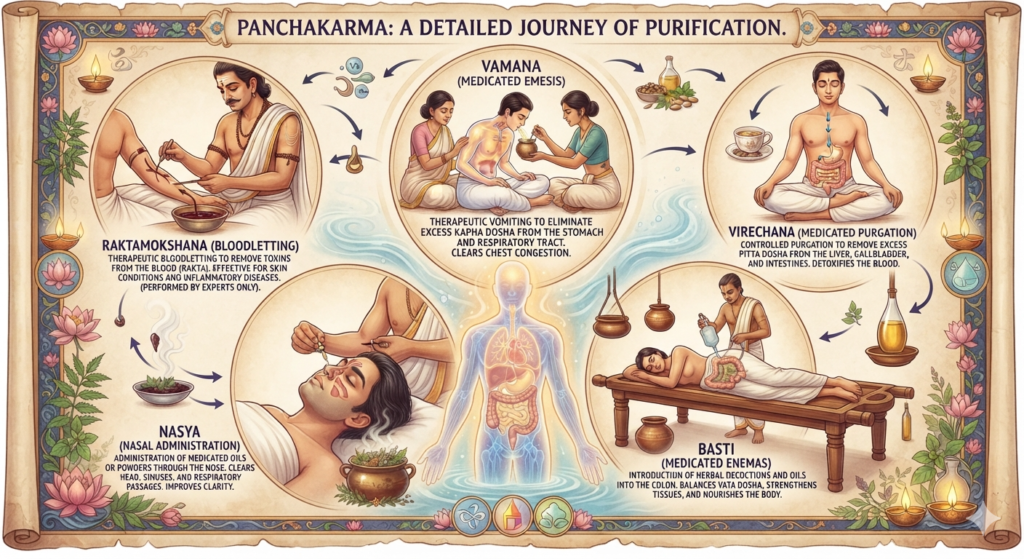
Five Panchakarma Therapies
- Vaman
- Virechan
- Basti
- Nasya
- Raktamokshan
Vaman:
In this treatment, a patient is given inside and outside oleation and fomentation treatments for few days which includes therapies and some ayurvedic medicines. Once the toxins get melted and accumulate in upper cavities of body, the patient is given emetic medicines and decoction. This enables vomiting and helps in disposing of the poisons from the body tissues. Vaman treatment is particularly suggested basically for kapha-dominated conditions, such as weight gain, asthma and hyperacidity.
Virechan:
In virechan, purgation or disposal of toxins happens through the clearing of the bowels. In this treatment too, the patient is given inside and outside oleation and fomentation treatments. From that point onward, the patient is given a natural purgative to encourage clearing of the guts that aides in purifying the body of toxins. Virechan treatment is prescribed fundamentally for pitta -dominated conditions, such as herpes zoster, jaundice, colitis, celiac infection etc.
Basti:
Managing medicated substances through enema is Ayurveda’s exceptional commitment to the therapeutic world. The treatment has huge advantages, particularly in convoluted and chronic diseases. According to the nature of disease, home grown decoctions, oils, ghee or milk are managed into the rectum and this has incredible positive effects. This treatment is to a great degree powerful against vata-dominated conditions, such as arthritis, piles and constipation.
Nasya:
This treatment is extremely effective in clearing and purging the head area. At the beginning of the treatment, the head and shoulder areas are given a delicate massage and fomentation. After that, nasal drops are regulated in both the nostrils. This achieves the cleaning of the whole head area and diminishes different sorts of cerebral pain, headache, hair issues, sleep disorder, neurological disorders, sinusitis, chronic rhinitis and respiratory ailments.
Raktamokshan:
This treatment is useful for cleaning of blood and viable against ailments caused because of impure blood. It can be done in a particular area or for the whole body. This treatment is especially valuable in different skin infections, such as psoriasis, dermatitis, and furthermore in local lesions such as abscesses and pigmentation.
How Does Panchakarma Work? (Brief Explanation)
Panchakarma is a traditional Ayurvedic approach designed to support the body through a structured process of preparation, therapeutic procedures, and recovery. In Ayurveda, it is traditionally used to help restore balance among the doshas—Vata, Pitta, and Kapha—and support overall wellness.
Panchakarma is not simply a single treatment. It is a personalized process in which an Ayurvedic practitioner selects therapies according to an individual’s constitution, current condition, strength, age, digestion, and other factors.
1. Preparation – Getting the Body Ready
Before the main Panchakarma procedures, Ayurveda traditionally recommends a preparation phase known as Purvakarma.
This may include:
- Snehana: Traditionally involves the use of oils or ghee, either internally or externally, as appropriate.
- Swedana: Herbal steam or sweating therapies may be used to support relaxation and prepare the body.
- Dietary adjustments and rest may also be recommended.
The purpose of this stage is traditionally described as preparing the body for the subsequent therapies.
2. Main Panchakarma Therapies
The word Panchakarma means “five actions.” Classical Ayurvedic texts describe five principal therapeutic approaches:
| Therapy | Traditional description |
| Vamana | Therapeutic emesis performed under professional supervision |
| Virechana | Therapeutic purgation |
| Basti | Medicated enema therapies |
| Nasya | Administration of medicines through the nasal route |
| Raktamokshana | Traditional bloodletting procedure |
Not everyone receives all five therapies. The appropriate approach depends on the individual’s needs and should be determined by a qualified Ayurvedic practitioner.
Frequently Asked Questions About Panchakarma
1. What Is Panchakarma and How Does It Work?
Panchakarma is a traditional Ayurvedic therapeutic approach involving a series of individualized procedures. According to Ayurveda, it is designed to support balance among Vata, Pitta, and Kapha. The process may include preparation, selected therapies, dietary guidance, rest, and post-treatment care.
2. What Are the Benefits of Panchakarma Treatment?
Panchakarma is a treatment program for the body, mind, and consciousness that cleanses and rejuvenates. Some people may experience a sense of relaxation, improved digestive comfort, or improved well-being after a properly supervised program. Individual experiences can vary, and Panchakarma should not be considered a guaranteed treatment for a disease.
3. What Are the Five Panchakarma Therapies?
The five classical Panchakarma therapies are Vamana, Virechana, Basti, Nasya, and Raktamokshana. Not everyone needs all five therapies. A qualified Ayurvedic practitioner generally selects procedures according to the individual’s condition, constitution, and needs.
4. How Long Does Panchakarma Treatment Take?
The duration varies from person to person. A Panchakarma program may include preparation, the main therapeutic procedures, and a recovery period. The overall duration depends on the therapies selected and the practitioner’s assessment.
5. Is Panchakarma Safe for Everyone?
No. Panchakarma is an individualized approach, and certain procedures may not be suitable for everyone. Age, strength, pregnancy, existing health conditions, medications, and other factors should be considered. It is best to consult a qualified Ayurvedic practitioner before undergoing Panchakarma.
6. What Are the Side Effects of Panchakarma?
Some people may experience temporary discomfort, tiredness, changes in bowel movements, nausea, or dehydration depending on the procedure. More intensive therapies can carry risks if performed incorrectly. Professional supervision is therefore important.
7. What Should You Eat During Panchakarma?
Ayurvedic practitioners commonly recommend light, simple, and easily digestible foods during different stages of Panchakarma. Foods such as rice preparations, soups, cooked vegetables, and other practitioner-recommended meals may be included. Your diet should be personalized according to the stage of treatment and your individual needs.
8. How Much Does Panchakarma Treatment Cost in India?
The cost varies on the city, Ayurvedic centre, duration, therapies, accommodation, and practitioner. Basic outpatient therapies may cost less, while residential Panchakarma programs can be more expensive. You can check the current package and therapy-wise charges directly with the Ayurvedic centre.
9. How Often Should You Do Panchakarma?
There is no single schedule that is appropriate for everyone. In Ayurveda, the frequency may depend on factors such as constitution, age, season, lifestyle, and individual needs. Panchakarma should not be repeated routinely without professional assessment.
10. What Can You Expect After Panchakarma Treatment?
After Panchakarma, Ayurveda traditionally recommends a gradual return to regular food and daily activities. Adequate rest, a balanced diet, good sleep, and healthy lifestyle habits may help support overall wellness during the recovery period. Individual experiences after treatment can vary.