
How to slow down caffeine intake
You probably already know caffeine keeps you awake. Somewhere between that first cup of coffee and your fourth espresso of the day something changes. The jitteriness starts. Your sleep gets worse. You realize you’re not actually more focused—you’re more tense. The idea of giving it up feels almost impossible.
Here’s what most guides leave out: cutting caffeine isn’t really about strength of will. It’s about knowing why you reached for it in the place and then finding something that actually works for your body—not some one-size-fits-all plan.
What the purpose of Reducing Caffeine?
Let’s be honest. Caffeine isn’t poison. A cup of tea or coffee can help you think better and feel better. The issue isn’t caffeine itself; it’s the amount and the habit that builds up slowly.
When you’re having than 400mg of caffeine every day (that’s about three to four cups of coffee) your nervous system stays on high alert. Your cortisol—the stress hormone—stays up. Your sleep gets lighter more broken. You wake up tired. Grab more caffeine to fix it which only makes the problem worse. Over time your body gets used to it so you need more to feel the effect.
Reducing caffeine can mean sleep more even energy all day less anxiety and fewer headaches. For some people it means finding out what their real energy level feels like which is often more steady than they thought.
The Withdrawal Reality
Let’s talk about the one: Yes, stopping caffeine all at once usually feels bad. Headaches, tiredness, bad mood and fog can come in 12 to 24 hours. Last for days or even a week. This isn’t weakness. Caffeine changes the way your brain works with adenosine and dopamine. When you stop suddenly your brain is out of balance.
The answer isn’t to push through pain. It’s to reduce. This makes it actually possible. You’re more likely to keep going.
A Taper Strategy That Actually Works
Start with knowing. For three or four days write down how caffeine you’re having. Note the time the drink and how caffeine it probably has. This isn’t about being strict; it’s about understanding. You might find out you’re drinking a lot when you start paying attention.
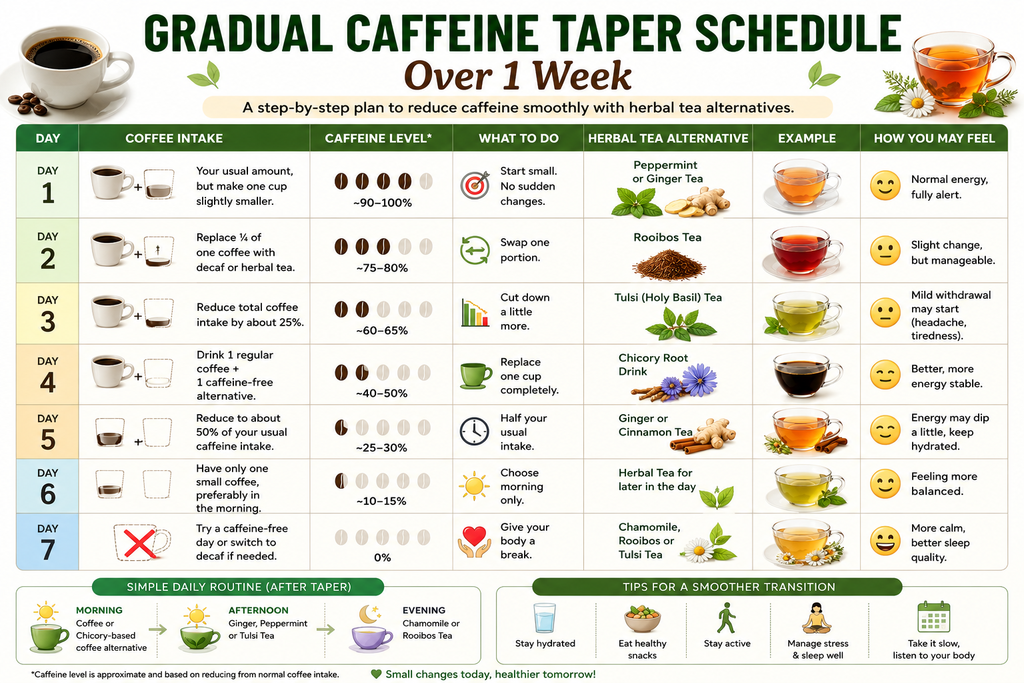
Cut back by 10–15% every days. If you’re having four cups of coffee daily (around 400mg of caffeine) reduce to three and a half cups the week. The week go down to three. Then. A half. This slow way means any withdrawal symptoms—if they happen—are light and easy to handle. Most people don’t get headaches when they reduce this way.
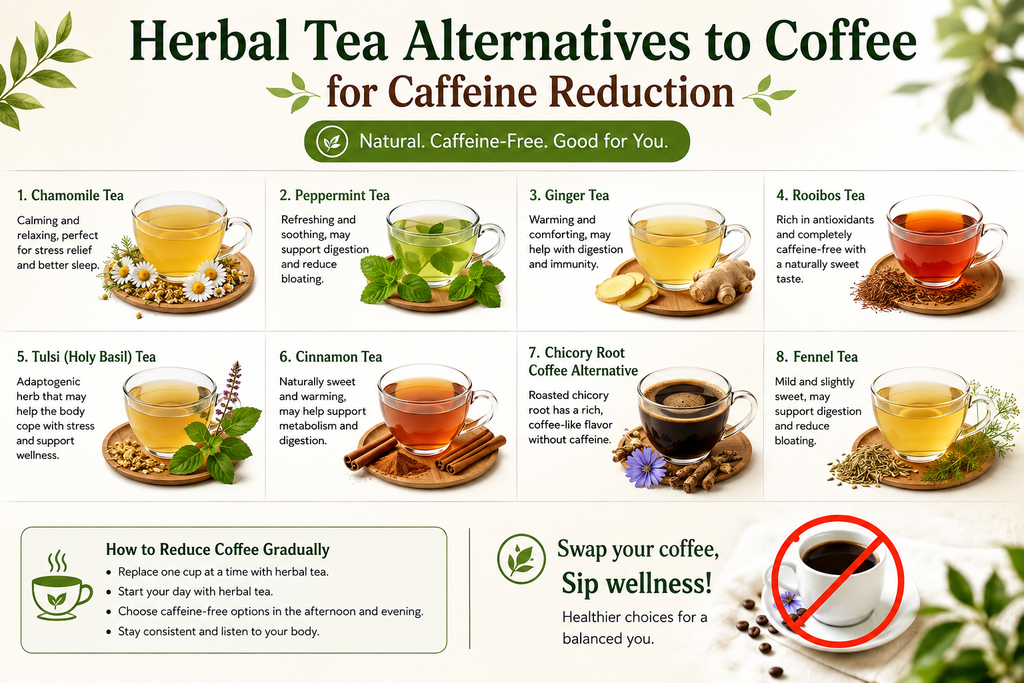
Swap don’t just take away. When you remove a cup of coffee put something in its place. This helps both mentally and physically. Black tea has about half the caffeine of coffee. Green tea has less. Herbal teas like chamomile, peppermint or ashwagandha tea—have no caffeine. Still give you the comfort of a warm drink and something to hold in the afternoon.
In traditions certain herbs have been used for years to help calm energy without the jolt. Ashwagandha helps your nervous system deal with stress without the crash. Tulsi (basil) helps with a clear mind and steady mood. These aren’t replacements for your morning cup—they’re additions that help your body find its rhythm.
Watch the Afternoon Trap
Most people can cut morning coffee without trouble. The real challenge is the 3 p.m. Slump. Your energy drops, your focus. Suddenly coffee feels necessary. It’s not because you actually need the caffeine. You’re tired because your sleep got less stimulants = better rest and your body is catching up on the sleep you missed.
Of reaching for espresso try this: move. A 10-minute walk, some stretching or a few stairs can wake up your system without the chemical hit. Drink water. Dehydration makes tiredness worse. Eat something with a protein and fat—nuts, cheese or a piece of fruit with nut butter. These help keep your blood sugar steady and can get you through the afternoon without caffeine.
If you really want something a cup of black tea is okay. It has caffeine. Much less than coffee and the taper is designed to handle it.
The First Two Weeks Are Key
The hardest part of reducing caffeine is the two weeks. Your body and brain are adjusting. During this time be extra gentle with yourself. Sleep earlier if you can. Reduce stress if possible. Don’t blame yourself for how hard this that’s just your brain chemistry, not a sign of being weak or not disciplined.
By week three most people notice something steady energy. No more midday crashes. Better sleep at night. Less anxiety. It takes time for your nervous system to adjust. It does.
Common Mistakes to Avoid
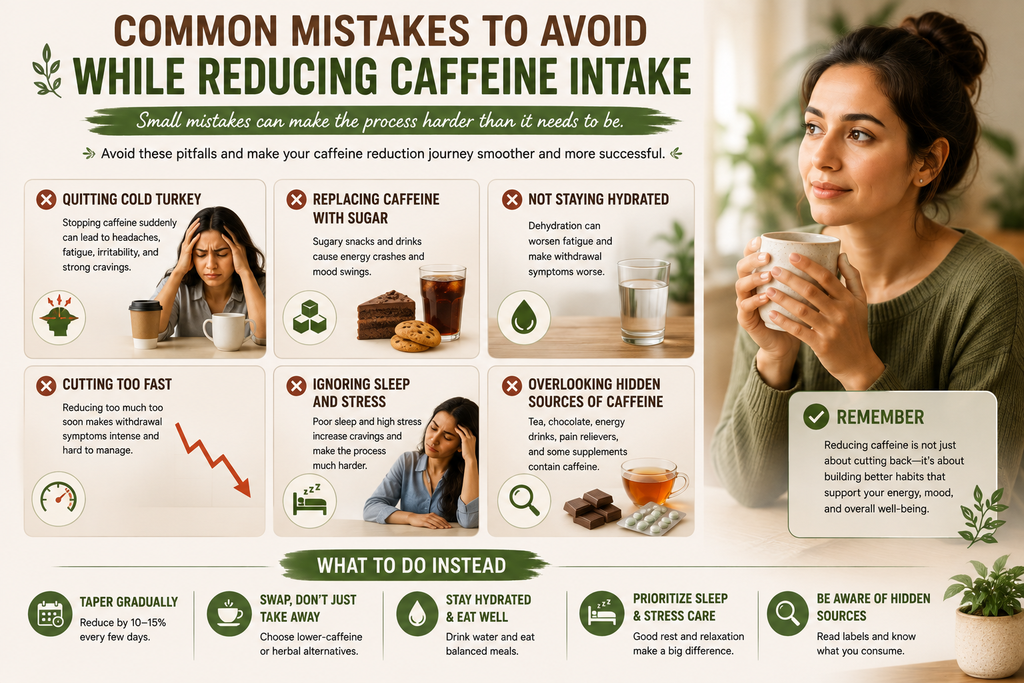
Replacing caffeine with sugar. When people stop caffeine they often reach for drinks or snacks. This creates a kind of energy roller coaster. If you want a treat in the afternoon pair it with protein or fat to keep your blood sugar stable.
Quitting good habits. Don’t think you have to stop your morning routine just because you’re switching from coffee to tea. The routine—sitting down taking time before the day starts—is helpful whether it’s tea or coffee.
All-or-nothing thinking. If you have a cup of coffee on day five that’s not failure. That’s being human. Get back to the taper the day. Progress isn’t always straight. That’s okay.
Why This Matters Beyond Sleep
Better sleep and less anxiety are benefits. But there’s something when you reduce caffeine you start to feel what your real energy level is. You become more aware of what wears you out and what actually helps you feel better. Your sleep patterns stabilize. You might realize you don’t need much stimulation as you thought.
Some people find they can have one cup of coffee in the morning without the dependency cycle coming. Others find they feel best without any caffeine. Both are okay—the point is you get to decide based on how your body feels, not based on habit or what you think you should do.
The First Step You don’t have to stop caffeine. You just have to start paying attention. Track for a days. Notice when you reach for it and why. Once you see the pattern the reduction becomes much easier than you’d think. The key is doing it enough that your body can adjust and replacing the habit with something that actually helps you—whether thats another tea, a walk or just a moment of rest.