

An alarm rings, messages arrive, and the day begins before you have had a moment to yourself. Between commuting, meetings, household responsibilities, and late-night scrolling, healthy habits can easily become an afterthought.
A Dinacharya routine for working adults offers a way to bring more structure to everyday life. In Ayurveda, Dinacharya refers to a daily routine that traditionally includes personal hygiene, movement, meals, and rest.
You can adapt this idea to a modern workday without buying special products or following a complicated timetable. Start with habits you can repeat, and make room for your health alongside your work.
What Is Dinacharya?
Dinacharya is Ayurveda’s approach to organizing daily activities into a regular routine. Traditional practices can include waking early, cleaning the mouth, bathing, exercise, and oil massage.
This guide combines that traditional emphasis on regularity with modern guidance on sleep and physical activity. It does not suggest that every traditional practice has proven medical benefits.
Research on many Ayurvedic treatments remains limited. A daily routine can support general wellbeing, but it does not replace treatment for an illness.
1. Choose a Wake-Up Time That Protects Your Sleep
Traditional Dinacharya often emphasizes an early start. For working adults, however, waking earlier is only practical when bedtime allows enough sleep.
Choose a wake-up time that fits your work and household responsibilities. Keep it reasonably consistent, and plan bedtime around it. Adults aged 18–60 generally need at least seven hours of sleep each night.
If you regularly finish work late, do not shorten your sleep simply to follow a sunrise routine. Shift workers should adapt the sequence around their main sleep period.
Preparing your clothes, bag, and lunch the evening before can create breathing room without an earlier alarm.
2. Keep Morning Personal Care Simple
Start with your usual oral hygiene and washing routine. You do not need an elaborate collection of Ayurvedic products to practise daily self-care.
A practical sequence might be:
- Use the bathroom without rushing.
- Brush your teeth with fluoride toothpaste.
- Wash or shower as needed.
- Get dressed before opening work messages.
Tongue cleaning appears in traditional Ayurvedic routines, but it is optional here and should not replace brushing or cleaning between your teeth. Avoid scraping forcefully.
Treat personal care as a regular habit rather than a detox ritual.
3. Make Space for Comfortable Movement
Set aside five to ten minutes for movement you can manage. Try an easy walk, gentle stretches, or familiar yoga movements that suit your ability.
This short session is a starting point. Adults should work toward at least 150–300 minutes of moderate-intensity activity each week, or the equivalent vigorous activity, with muscle-strengthening activities on two or more days. Some movement is better than none, and reducing prolonged sitting also matters.
Build activity into your day by walking part of your commute, taking a lunchtime walk, or exercising after work. Choose a pattern you can maintain rather than forcing everything into the morning.
4. Plan Meals Around Your Actual Workday
A regular routine is easier when you know when and where you will eat. Look at your calendar and protect a realistic meal break whenever possible.
For breakfast, choose familiar foods that suit your appetite and needs. Examples include vegetable poha with curd, oats with milk and nuts, or eggs or tofu with wholegrain toast.
A practical packed lunch could combine vegetables, a protein source such as dal or beans, and rice or roti. These are meal ideas, not a prescribed Ayurvedic diet.
Try to eat seated and give yourself time to chew. If possible, pause work messages for part of the meal so eating does not become another hurried task.
People with diabetes or other conditions requiring specific meal timing should follow their individual care plan.
5. Keep Water Accessible
Place drinking water where you can reach it during work, and refill your bottle when needed. This is often more useful than relying on a complicated morning drink.
Choose warm or room-temperature water according to comfort. Warm water is not a special fat-burning or detox treatment, and Dinacharya does not require forcing down large amounts on waking.
Follow any fluid guidance given by your clinician, especially if you have a prescribed fluid restriction.
6. Build Brief Pauses into Desk Work
Use natural transitions to interrupt long stretches at your desk. Stand up after a meeting, walk to refill your water, or move around before starting the next task.
An hourly reminder can be a practical prompt, although no single break schedule suits every job.
You can also use a quiet minute to relax your shoulders and breathe normally. The aim is to create a pause, not to perform demanding breathwork while distracted.
For people whose jobs already involve standing or physical labour, useful breaks may mean sitting down, changing position, and resting.
7. Give the Evening a Clear Transition
After work, choose one small action that marks the end of the working day. Put away your laptop, change clothes, or take a short walk.
Then make space for dinner, family, hobbies, or rest. A routine should leave room for ordinary life rather than turning the evening into another checklist.
Some people enjoy gentle self-massage, traditionally called Abhyanga, as a relaxation practice. It is optional. Avoid products that irritate your skin, and remember that oil can make floors slippery. Massage is not a treatment for unexplained pain or swelling.
8. Create a Repeatable Wind-Down Routine
Choose a few quiet activities you can repeat before bed: prepare tomorrow’s essentials, lower the lights, read, or listen to calm music.
The CDC recommends consistent sleep and wake times, turning off electronic devices at least 30 minutes before bedtime, and avoiding caffeine in the afternoon or evening.
You do not need herbal sleep supplements to follow this routine. If sleep problems persist, seek advice instead of repeatedly trying new products.
A Sample Dinacharya Schedule for a 9-to-5 Job
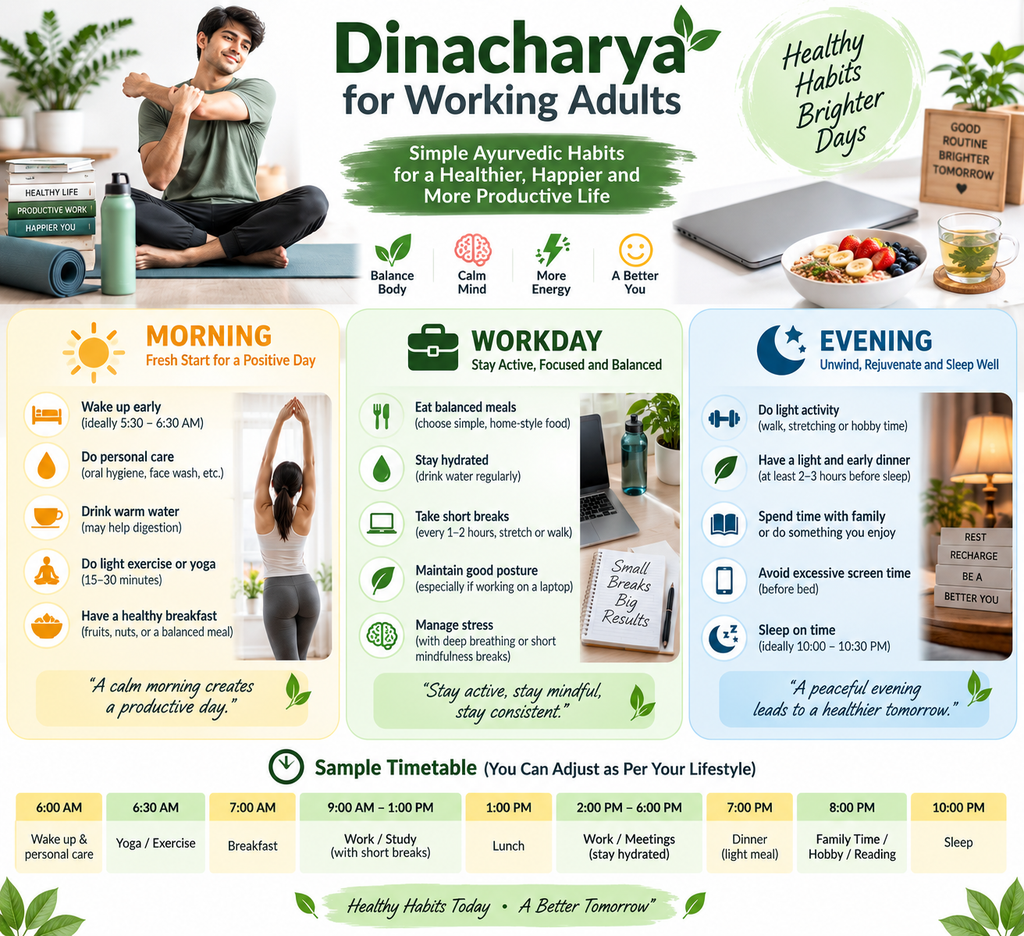
This timetable is an example, not a medical prescription. Adjust it for commuting, caring responsibilities, and sleep needs.
| Time | Practical activity |
| 6:30 a.m. | Wake up and complete personal care |
| 6:45 a.m. | Gentle movement or a short walk |
| 7:15 a.m. | Breakfast and preparation for work |
| During work | Water access and brief movement breaks |
| 12:30–1:30 p.m. | Lunch at a suitable break time |
| After work | Walk, exercise, or another enjoyable activity |
| 7:00–8:00 p.m. | Dinner, depending on your schedule |
| 9:30 p.m. | Prepare for tomorrow and begin winding down |
| 10:30 p.m. | Bedtime, allowing eight hours before waking |
How to Start Without Feeling Overwhelmed
Choose just three habits for your first week: a consistent wake-up time, a proper meal break, and a short evening wind-down.
Once those feel manageable, add a walk or another habit. On unusually busy days, keep the routine small. Returning to it the next day matters more than completing every step perfectly.
Frequently Asked Questions
Do I need to wake up at 5 a.m.?
No. Adapt the routine to your work schedule and allow enough sleep. An early alarm is not helpful if it leaves you sleep-deprived.
Can I follow Dinacharya without Ayurvedic medicines?
Yes. The routine described here is based on daily habits and does not require supplements, tonics, or herbal medicines.
Can Dinacharya cure acidity, diabetes, or insomnia?
It is not a proven cure for these conditions. Daily habits may form part of broader care, but persistent symptoms and diagnosed illnesses need appropriate assessment and treatment.
What if I work night shifts?
Organize personal care, meals, movement, and a wind-down around your shift and main sleep period. You do not need to copy a daytime worker’s clock times.
Start with one practical change you can repeat tomorrow. A useful Dinacharya routine fits your life and gives your wellbeing a regular place in it.
This article provides general wellness information and is not personalized medical advice.