You got your lipid profile report. Total cholesterol is high, LDL is over 100, triglycerides are up — and the doctor said “diet change, walking, and come back in three months.”
Then you searched. One site says stop ghee completely. Another says take this herb. A third gives a diet plan with salmon and olive oil — food most Indian kitchens do not cook with every day.
So let us keep this simple, in Indian words, with Indian food, and with honest limits. Ayurveda can help with cholesterol. It cannot replace your doctor’s medicine if your numbers are very high. Both things are true at the same time.
First, Read Your Report Correctly
Your report has four numbers. Here is what they mean, in the simplest way:
| Marker | What it is | Desirable level |
|---|---|---|
| Total cholesterol | The overall reading | Below 200 mg/dL |
| LDL — “bad” cholesterol | The one that sticks to artery walls and forms plaque | Below 100 mg/dL |
| HDL — “good” cholesterol | The one that carries extra cholesterol back to the liver | Above 40 mg/dL (men), above 50 mg/dL (women) |
| Triglycerides | Blood fat that rises with sugar, maida and alcohol | Below 150 mg/dL |
These are the standard desirable levels given by the Indian Heart Association. Your personal target can be stricter — for example, below 70 mg/dL LDL if you already have diabetes or heart disease — so always go by what your doctor wrote for you, not by this table alone.
One important point: high cholesterol usually has no symptoms. No headache, no pain, nothing you can feel. That is why people find out only from a blood test — and why a test every 6–12 months matters once you are over 35, or earlier if heart disease runs in your family.
Why Indians Get High Cholesterol
It is rarely one big mistake. It is small daily habits, added up:
- Too much refined carbohydrate — big portions of white rice, maida biscuits, namkeen, sweets and sugary drinks. This is the biggest driver of high triglycerides in Indian reports.
- Reused and vanaspati oil — frying in the same oil again and again, and vanaspati in bakery food, add the worst kind of fat.
- Too little fibre — not enough dal, vegetables, oats and whole grains in a day.
- Too little movement — sitting all day lowers HDL, the good cholesterol.
- Low HDL is common in Indians — many Indian reports show HDL below 40 even when total cholesterol looks “okay”. That alone is a risk factor.
The good news: diet alone typically lowers LDL by 10–25%, which is enough for many low-to-medium-risk people to avoid medicine. Triglycerides respond even faster — often in 4–8 weeks of cutting sugar and refined carbs.
Cholesterol Kam Karne Ke Upay: The Indian Diet That Works
No exotic diet. Just changes inside your normal Indian thali:
1. Change the oil, not the food. Cook in mustard oil, groundnut oil, rice bran oil or sesame oil. Rotate them month to month. Avoid vanaspati completely, and never reuse frying oil. Keep total oil and ghee to about 3 teaspoons (15 ml) a day. A teaspoon of ghee sometimes is fine — the problem is ghee as the main cooking medium, every meal.
2. Make dal and vegetables do the heavy work. Fill half your plate with vegetables — bhindi, beans, spinach, carrots, methi. Eat dal first, then roti or rice. Moong, masoor, chana and rajma give soluble fibre, which binds cholesterol in the gut and carries it out before it enters the blood.
3. Swap the base, not the meal. Replace large portions of white rice with millets — jowar, bajra, ragi — or brown rice and whole-wheat roti. Start the day with oats upma, oats chilla or daliya instead of biscuits and tea.
4. Snack like it matters. Skip fried namkeen and bakery biscuits. Roasted chana, sprouts chaat, puffed rice with vegetables, or a small handful of almonds or walnuts a day are the better swap. Walnuts and flaxseeds help HDL and triglycerides — but keep the portion small, a handful, not a bowl.
5. Cut the sugar you do not notice. Sweets, desserts and sugar-sweetened drinks push triglycerides up and HDL down. Whole fruit is better than juice — an apple or guava with its skin gives fibre; the juice does not.
6. Eat light and early at night. A light, early dinner and 4–6 small meals instead of 2–3 very heavy ones helps both cholesterol and digestion.
Do this for 8–12 weeks, then repeat the lipid profile. That is the honest test — not how you feel, but what the numbers say.
High cholesterol and fatty liver usually travel together. If your ultrasound also shows fatty liver, read our complete guide: Fatty Liver Kaise Kam Kare: Ayurvedic Diet Chart, Herbs & Liver Care Guide.
7 Ayurvedic Herbs for Cholesterol — With Honest Evidence
Ayurveda has used these herbs for centuries, and modern health reporting covers them widely too. Modern research supports some of them — but the evidence is not equal for all, and no herb is a replacement for a statin when your doctor has prescribed one. Here is the honest picture:
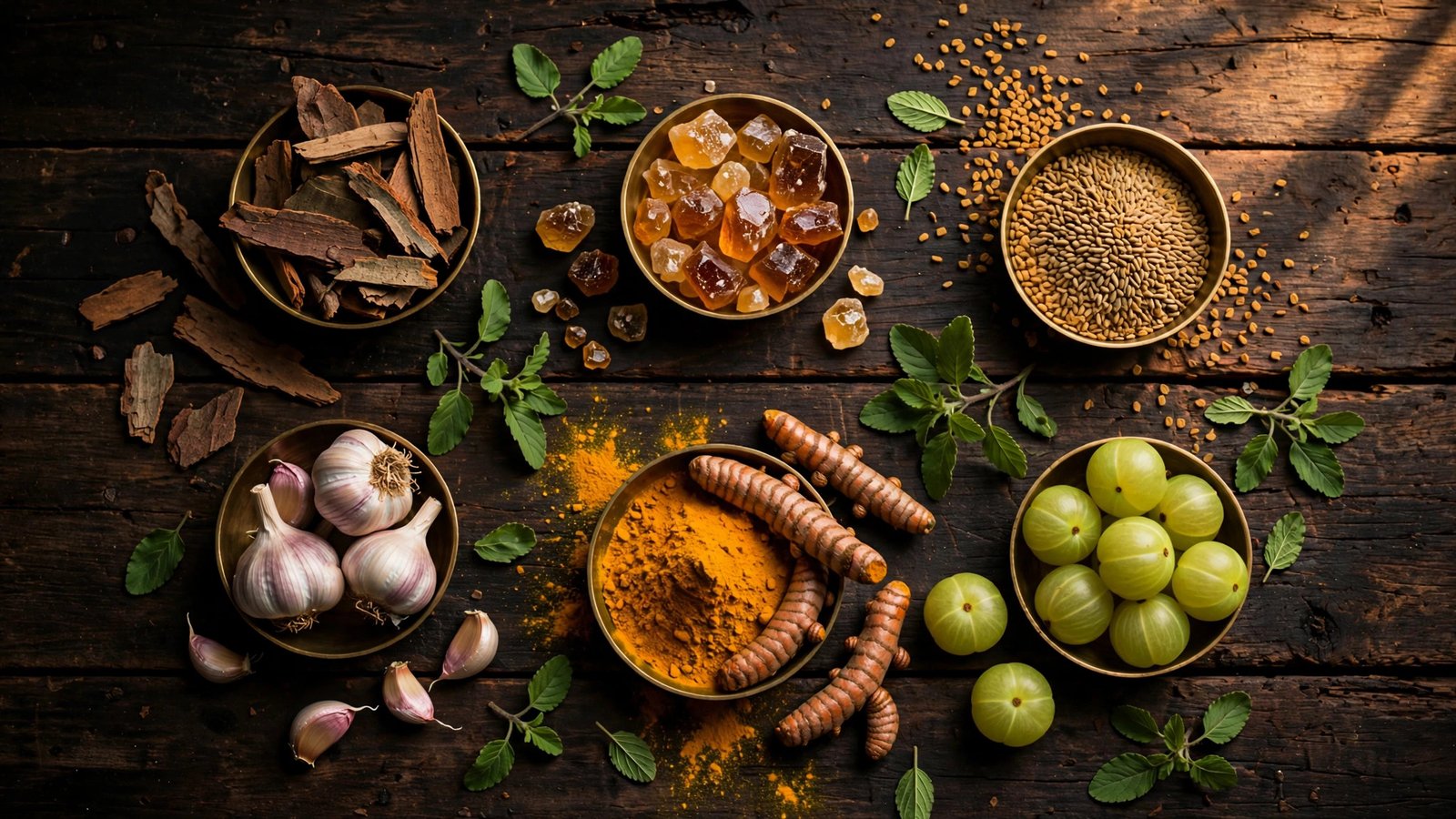
1. Guggul (Commiphora mukul) — the most studied. Its active compound, guggulsterone, helps the liver clear LDL. A systematic review of randomised trials found total cholesterol reductions of 10–27% with guggul. It can interact with blood-thinning medicines and can affect thyroid levels, so tell your doctor if you take it.
2. Arjuna (Terminalia arjuna) — the heart herb. Arjuna bark is Ayurveda’s classic cardiac herb. In one study of 87 people with high cholesterol, arjuna powder followed by arogyavardhini vati significantly reduced total and LDL cholesterol and raised HDL. It also supports heart muscle strength — that is why it appears in so many heart formulations.
3. Methi / Fenugreek seeds — the kitchen remedy. Methi’s soluble fibre (galactomannan) traps cholesterol and bile acids in the gut. Studies show 18–25 g of methi seed powder a day can reduce LDL by 10–15% and triglycerides by about 26% in 12 weeks. The home way: soak a teaspoon of methi seeds overnight, drink the water with the seeds in the morning.
4. Garlic (Lasuna). Garlic helps reduce cholesterol by slowing cholesterol production in the liver. A Cochrane analysis of 26 trials found garlic lowers total cholesterol by about 7–8%. One crushed raw clove in the morning, or 2–3 cloves in cooking daily, is the usual home use.
5. Triphala (Amla + Bibhitaki + Haritaki). Rich in antioxidants, Triphala helps prevent lipid peroxidation — the process that makes LDL harmful. Animal studies are promising; human evidence is still limited, so treat it as support, not as a standalone treatment.
6. Haldi / Turmeric. Curcumin has anti-inflammatory and antioxidant properties and helps reduce LDL and triglycerides while improving HDL. A pinch of black pepper helps the body use curcumin better — the same reason haldi doodh works with pepper in it.
7. Amla. Rich in vitamin C and antioxidants, amla helps protect cholesterol from oxidative damage. One fresh amla a day, or amla juice diluted with water in the morning, is the simple habit.
Also useful, in small daily ways: tulsi leaves or tulsi tea, ginger in cooking, and coriander-seed water (soak a tablespoon overnight, strain and drink in the morning).
A note on honesty: a systematic review of herbal treatments for high cholesterol concluded the evidence for these herbs is promising but not conclusive, and long-term safety is not fully established for all of them. That is not a reason to ignore Ayurveda — it is a reason to use it alongside diet, walking and your doctor’s advice, and to tell your doctor what you are taking.
Walking, Yoga and Sleep — The Part People Skip
- Walk 30 minutes a day, briskly. Even walking alone changes HDL and triglycerides meaningfully within weeks. It is the single most underrated cholesterol medicine.
- Yoga and breathing: stress reduction, yoga and pranayama have been shown in studies to help reduce total and LDL cholesterol. Anulom Vilom and slow, regular breathing for 10 minutes a day is a realistic start.
- Sleep 7–8 hours. Poor sleep quietly worsens cholesterol, blood sugar and blood pressure together. Keep a fixed sleep time, and finish dinner 2–3 hours before bed. (Good sleep also protects your immunity — read our guide on winter immunity habits.)
KADSTROL — Rama Arogya Pharmacy’s Cholesterol & Heart Health Syrup
If you want an Ayurvedic formulation rather than single herbs, KADSTROL Syrup (200 ml) is Rama Arogya Pharmacy’s product for cholesterol management and heart health. It is sugar-free. Each 10 ml contains Arjuna 500 mg, Jatamasi 200 mg, Pushkarmool 150 mg, Punarnava 150 mg, Nagarmotha 150 mg, Gaujwan 150 mg, Gokhru 150 mg, Ashwagandha 150 mg, Rasonam (garlic) 100 mg, Dalchini 100 mg, Amla 100 mg and Kali Mirch 100 mg. As per the product catalogue, it helps manage cholesterol levels, lower LDL (bad cholesterol), raise HDL (good cholesterol), support heart health and maintain healthy blood pressure.
Take it only as directed on the label or by your physician. If you are already on a statin or blood thinner, tell your doctor before adding any Ayurvedic formulation, including KADSTROL.
KADSTROL works best as one part of the full plan in this article — diet, walking, sleep and regular testing — not as a replacement for any of them.
When Diet and Herbs Are NOT Enough — See a Doctor
Go to your doctor promptly, and do not rely on home remedies alone, if:
- Your LDL is above 190 mg/dL — this can mean familial high cholesterol and usually needs a statin as the main treatment. Ayurveda can support it, but cannot replace the statin here.
- You already have heart disease, diabetes, or high blood pressure — your LDL target is stricter (below 70 mg/dL), and your doctor should set the plan.
- You have chest pain, breathlessness, or a family history of early heart attack.
- You are pregnant — cholesterol-lowering herbs, including Guggul, are not established as safe in pregnancy, and raised cholesterol in pregnancy is often normal.
And never stop a prescribed statin suddenly because an herb started working — any dose change is your doctor’s decision, based on a repeat lipid profile.
A Simple 4-Week Start
Week 1: Change the oil, stop vanaspati and reused oil, cut sugary drinks.
Week 2: Add methi water in the morning, dal-first meals, and a 30-minute walk.
Week 3: Add oats or daliya breakfast, roasted chana snacks, and garlic in cooking.
Week 4: Fix sleep time, add tulsi tea or haldi doodh at night, and book your repeat lipid profile for week 8–12.
Small, daily, boring — and that is exactly why it works.
Frequently Asked Questions
What is the fastest way to reduce cholesterol in Hindi — cholesterol kam karne ke upay?
The fastest realistic way is to cut sugar and refined carbs (which lowers triglycerides in 4–8 weeks), change cooking oil to mustard or groundnut oil, eat dal and vegetables first, and walk 30 minutes daily. Diet alone typically lowers LDL by 10–25% in 8–12 weeks. There is no one-day fix.
What is the normal LDL cholesterol level?
For most adults, LDL below 100 mg/dL is desirable. Total cholesterol should be below 200 mg/dL, HDL above 40 mg/dL for men and above 50 mg/dL for women, and triglycerides below 150 mg/dL. If you have diabetes or heart disease, your doctor may set your LDL target below 70 mg/dL.
Which Ayurvedic medicine is best for cholesterol?
The most studied Ayurvedic herbs for cholesterol are Guggul, Arjuna, Methi (fenugreek), garlic, Triphala, turmeric and Amla. Guggul and Arjuna have the strongest trial evidence. No single herb is “best” for everyone — the right choice depends on your numbers, age and other medicines, so ask an Ayurvedic doctor.
Does Guggul really reduce cholesterol?
A systematic review of randomised trials found Guggul reduced total cholesterol by 10–27%. The evidence is promising but not conclusive, and Guggul can interact with blood thinners and thyroid medicine, so tell your doctor before taking it.
Can Ayurveda replace cholesterol medicine (statin)?
No — not when LDL is above 190 mg/dL, or when you already have heart disease or diabetes. In those cases a statin is the main treatment and Ayurveda is a support alongside it. For mildly raised cholesterol in a low-risk person, diet, walking and Ayurvedic herbs may be enough — but only your doctor can decide that from your lipid profile.
What foods should I avoid in high cholesterol?
Avoid vanaspati, reused frying oil, red meat and processed meat, full-fat dairy in large amounts, maida biscuits and bakery food, namkeen, sweets and sugary drinks. These raise LDL and triglycerides. The biggest Indian culprit is usually refined carbs and hidden sugar, not eggs alone.
What Indian food is good for cholesterol?
Oats and daliya, dal and legumes (moong, masoor, chana, rajma), millets (jowar, bajra, ragi), vegetables like bhindi, beans and spinach, methi seeds, garlic, walnuts, flaxseeds, and plain curd. Cook in mustard, groundnut, rice bran or sesame oil.
How long does it take to lower cholesterol with Ayurveda and diet?
Triglycerides often improve in 4–8 weeks. LDL usually needs 8–12 weeks of consistent diet, walking and herbs before a repeat test shows a clear change. Herbs alone, without diet change, work much more slowly.
Is KADSTROL good for cholesterol?
KADSTROL Syrup (200 ml, sugar-free) is Rama Arogya Pharmacy’s Ayurvedic syrup for cholesterol management and heart health, made with Arjuna, garlic, Amla and other herbs. Take it as directed on the label or by your physician. Tell your doctor if you already take a statin or blood thinner. It works as part of a full plan — diet, walking, sleep and regular testing — not on its own.
When should I see a doctor for high cholesterol?
See a doctor if your LDL is above 190 mg/dL, if you have heart disease, diabetes or high blood pressure, if you have chest pain or breathlessness, or if your cholesterol does not improve after 3 months of diet and lifestyle change. High cholesterol has no symptoms, so regular testing is the only way to know.
Disclaimer: This article is for general education only and is not medical advice. Ayurvedic herbs and formulations should be taken as per the label or a qualified practitioner’s guidance, especially during pregnancy, for children, and if you take regular medicines such as statins or blood thinners.
— Rama Arogya Pharmacy | Traditional Ayurveda. Trusted Care.
Pingback: Fatty Liver Kaise Kam Kare: Ayurvedic Diet Chart, Herbs & Liver Care Guide - Rama Aarogya Pharmacy