You went for a routine ultrasound — maybe for a health checkup, maybe for stomach pain. And the report says: “Fatty Liver, Grade 1” or “Grade 2”.
Then the confusion starts. One person says it is nothing. Another says stop eating everything. A third forwards a “liver detox” video.
Let us keep this simple, in Indian words, with Indian food. The honest summary first: early fatty liver can be reversed — and the main treatment is not a medicine, it is diet, weight and walking. Ayurveda supports that process well. But ignored for years, fatty liver can slowly damage the liver. Both things are true.
What Is Fatty Liver? Samjhe Simple Words Me
Your liver normally has a small amount of fat. When fat builds up inside the liver beyond that, it is called fatty liver. Doctors also call it NAFLD or the newer name MASLD. It is not only a drinker’s problem — in India today, most fatty liver happens in people who drink little or no alcohol. The real drivers are belly fat, sugar, refined food, diabetes and sitting all day.
Your ultrasound report shows a grade. Here is what it means:
| Grade | What it means | Worry level |
|---|---|---|
| Grade 1 | Mild — a little extra fat in the liver | Lowest — fully reversible with lifestyle |
| Grade 2 | Moderate — clearly more fat, liver working under load | Needs a proper plan, still reversible |
| Grade 3 | Severe — heavy fat build-up | Doctor’s close supervision needed |
If nothing changes, the line of progress is: fatty liver → liver inflammation (NASH) → scarring (fibrosis) → cirrhosis. The good news is that the first stages can go backwards. Scarring, once heavy, usually cannot fully reverse — which is why acting at Grade 1 or 2 matters.
Fatty Liver Ke Lakshan: Symptoms (Mostly Silent)
Like high cholesterol, fatty liver usually has no clear symptoms. Most people find out from an ultrasound they did for another reason. When signs do appear, they are vague:
- Tiredness that does not match your work
- Heaviness or mild discomfort on the right side of the stomach, below the ribs
- Bloating, gas and slow digestion after meals
- Rising weight around the belly
- In blood tests: SGPT / SGOT (ALT / AST) slightly high
Do not wait for symptoms. If you have belly fat, diabetes, high triglycerides or high cholesterol, ask for an ultrasound and liver function test once a year. (Fatty liver and cholesterol rise together — read our guide on cholesterol kam karne ke upay to check both sides of the problem.)
Why Indians Get Fatty Liver
- Sugar and refined carbs — cold drinks, packaged juices, sweets, maida biscuits, namkeen, big portions of white rice. Extra sugar is converted by the liver into fat — stored right there in the liver.
- Belly fat (visceral fat) — the fat around the stomach is directly linked to liver fat. Even people who look “not very fat” can have it — the thin-outside, fat-inside pattern is common in Indians.
- Diabetes and insulin resistance — high blood sugar and fatty liver feed each other.
- Too little movement — sitting all day slows fat burning everywhere, liver included.
- Alcohol — for those who drink, alcohol adds a second, direct injury on top.
- Crash patterns — very rapid weight loss, and some medicines, can also worsen the liver. Slow and steady is the safe route.
Kya Fatty Liver Reverse Ho Sakta Hai? (The Numbers)
Yes — in the early stages, and the research gives clear targets. The amount of weight you lose decides how much the liver improves:
- Lose ~5% of body weight → liver fat starts reducing
- Lose ~7% → liver inflammation calms down (large studies show significant improvement at 7% or more)
- Lose ~10% → even early scarring can improve
Aim for half to one kilo a week. Very fast weight loss can actually worsen the liver and cause gallstones — no crash diets, no “7-day detox”.
Diet pattern matters too: in one trial, a Mediterranean-style diet (vegetables, pulses, whole grains, good fats, fish) reduced liver fat by 39% in six weeks, against 7% on a low-fat high-carb diet — with the same weight loss in both groups. The Indian version of that pattern is exactly the diet chart below.
Fatty Liver Diet Chart: Kya Khaye, Kya Na Khaye
No foreign diet plan. Changes inside your normal Indian kitchen:
Khaye (Eat more of these)
- Vegetables, half the plate — lauki, tori, beans, bhindi, spinach and other leafy greens, carrots, broccoli. Leafy greens in particular are linked with less liver fat.
- Dal and pulses at every meal — moong, masoor, chana, rajma, soyabean. Protein and fibre keep you full and steady blood sugar.
- Whole grains and millets — whole-wheat roti, jowar, bajra, ragi, oats, brown rice in smaller portions.
- Good fats in small amounts — mustard, groundnut, rice bran or sesame oil (rotate), a small handful of walnuts or almonds, flaxseeds.
- Protein at every meal — dal, curd, chaas, paneer, eggs, or grilled fish/chicken if you eat non-veg. Omega-3 from oily fish reduces liver fat and also lowers triglycerides.
- Coffee, if you drink it — 2–3 cups of plain coffee a day (little or no sugar) is consistently linked in studies with less liver damage and lower fibrosis risk. This is one of the most surprising, well-supported findings in liver research.
- Garlic and haldi in cooking — in one study, garlic powder taken daily for 15 weeks improved fatty liver measures; turmeric with black pepper is the everyday Indian way to get curcumin.
Na Khaye (Stop or sharply cut these)
- Sugary drinks — the number one enemy. Cold drinks, packaged juices (even “no added sugar” ones), energy drinks, sweet lassi, sugar in chai. Liquid sugar goes straight to liver fat.
- Maida and refined food — biscuits, namkeen, samosa, kachori, white bread, bakery items, instant noodles.
- Fried food and reused oil — deep-fried snacks, and frying again and again in the same oil.
- Alcohol — if you have fatty liver, the safe amount is none until your doctor says otherwise.
- Red meat and processed meat — high in saturated fat; keep portions rare and small.
- Late, heavy dinners and second helpings at night — finish dinner 2–3 hours before sleep.
One-Day Sample Chart
Morning: Warm water; soaked methi seeds water (also helps sugar and cholesterol)
Breakfast: Oats upma / daliya / vegetable poha + curd
Mid-morning: One fruit (apple, guava, papaya) or chaas
Lunch: 2 whole-wheat or millet rotis, dal, one big bowl of sabzi, salad, curd
Evening: Plain coffee or green tea + roasted chana (no namkeen)
Dinner (by 8 pm): Light — moong dal khichdi with vegetables, or roti + sabzi + dal, small portion
Before bed: Haldi doodh (toned milk) with a pinch of black pepper, no sugar
Follow the chart for 8–12 weeks, then repeat the ultrasound and LFT. The report is the proof — not how light you feel.
Ayurvedic Herbs for Fatty Liver — With Honest Evidence
In Ayurveda, fatty liver is understood as weak digestive fire (Agni) with excess Kapha and Meda (fat tissue) settling in the liver (Yakrit). Treatment therefore starts with digestion and fat metabolism — not with a “detox”. The herbs traditionally used for the liver:
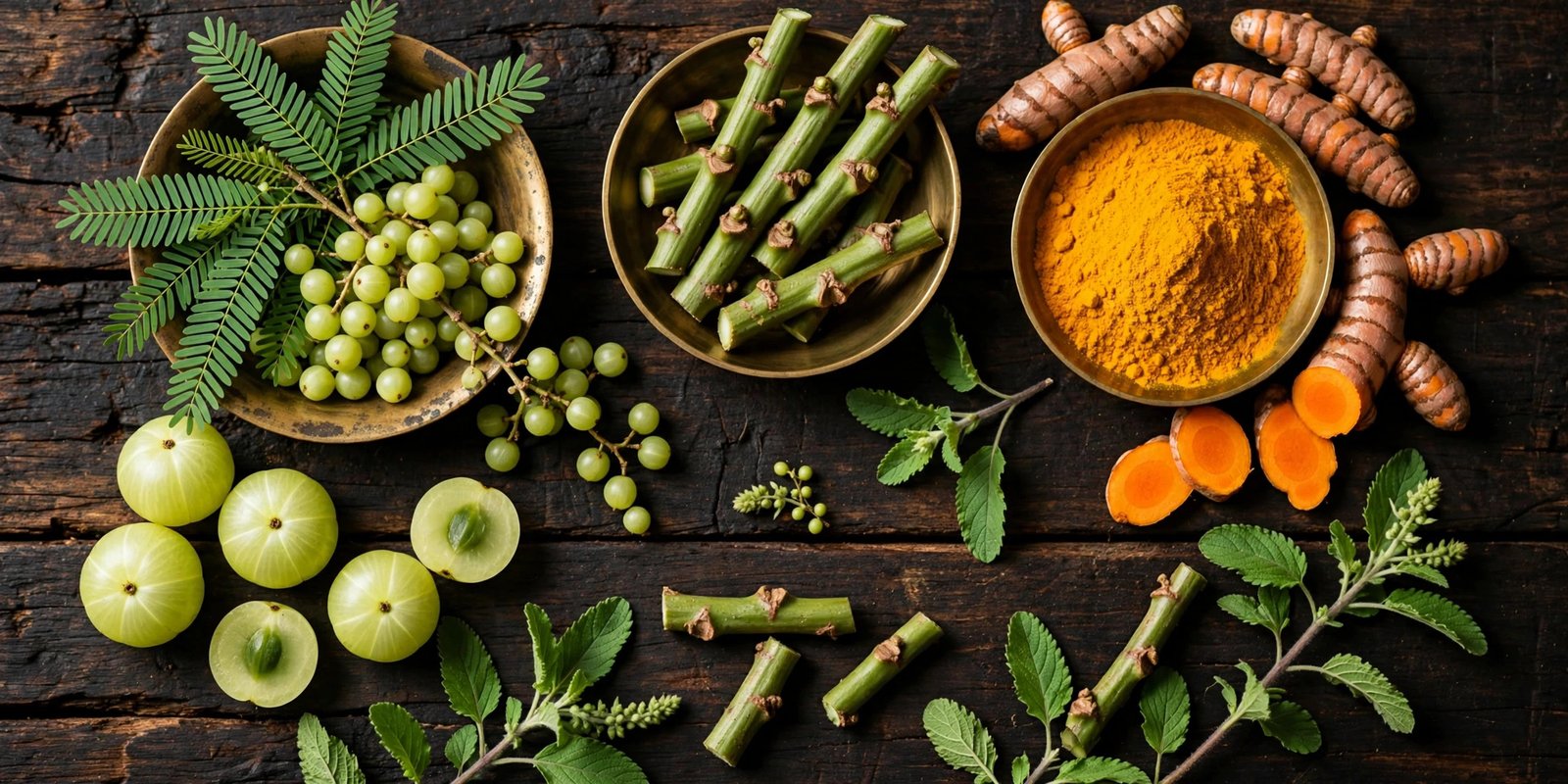
1. Bhumi Amla (Phyllanthus niruri) — the liver herb. One of the most used Ayurvedic herbs in liver care, traditionally used to support the liver and bile flow. It is the first herb most vaidyas reach for in liver formulations.
2. Kutki (Picrorhiza kurroa). A classical bitter herb for the liver, used to support bile flow and fat metabolism. Bitter herbs are central to Ayurvedic liver care. Kutki is strong — short courses, under guidance.
3. Kalmegh (Andrographis). Another bitter, traditionally used for liver and digestive complaints, and to support the liver during recovery.
4. Giloy (Guduchi). Supports immunity and calms inflammation; used in liver care as a supporting herb, and familiar to most Indian homes after the immunity years.
5. Triphala (Amla + Bibhitaki + Haritaki). Supports digestion and regular bowel movement — a heavy, sluggish gut and fatty liver travel together, so Triphala is common support in liver plans.
6. Punarnava. Traditionally used for swelling and fluid retention linked with liver problems, and to support the kidneys while the liver recovers.
7. Haldi / Turmeric. Curcumin is anti-inflammatory and antioxidant; trials of curcumin with piperine (black pepper) show improvements in liver fat measures. Daily haldi in food is the simple baseline.
An honesty note, and it matters: some herbal products can themselves harm the liver if taken randomly, in high doses, or mixed with other medicines. Do not take liver herbs on your own for months — tell your doctor what you are taking, take formulations from a licensed manufacturer, and recheck your liver tests as advised. Ayurveda works best here as part of the full plan: diet, walking, weight, and regular reports.
Walking, Sleep and Daily Routine
- Walk 40–45 minutes a day, briskly — at least 150 minutes a week. Walking reduces liver fat even before the weight falls. A slow 10-minute walk after lunch and dinner helps sugar, which helps the liver.
- Add light strength work 2–3 days a week — squats, stairs, light weights. Muscle burns sugar and fat even at rest.
- Sleep 7–8 hours, no day-sleep habit — poor sleep worsens insulin resistance; sleeping in the day is classically linked in Ayurveda with Kapha and fat gain.
- Stop alcohol completely while the liver recovers.
Kadamzyme — Rama Arogya Pharmacy’s Liver & Enzyme Tonic
Since Ayurveda treats fatty liver from the digestion side, the formulation from Rama Arogya Pharmacy that fits this plan is Kadamzyme Syrup (200 ml / 100 ml) — an Ayurvedic Liver and Enzyme Tonic, for liver health and blood formation. It is sugar-free, which matters because sugar is the first thing a fatty liver patient must cut — a sugary tonic would work against the plan.
Take it only as directed on the label or by your physician, and tell your doctor if you take regular medicines for diabetes, blood pressure or cholesterol. Kadamzyme is a support inside the full plan in this article — diet chart, walking, weight and repeat reports — not a replacement for any of them.
When to See a Doctor — Do Not Self-Treat
Go to your doctor promptly if:
- Your report says Grade 3, or mentions fibrosis, NASH or cirrhosis
- SGPT/SGOT are more than twice the normal range, or keep rising on repeat tests
- You have diabetes with fatty liver — the two together raise risk faster and need a combined plan
- You notice yellow eyes or skin (jaundice), swelling in the legs or stomach, vomiting blood, or heavy tiredness
- You drink alcohol regularly — stopping may need medical support, not just willpower
- Your reports do not improve after 3 months of honest diet and walking
A Simple 4-Week Start
Week 1: Stop sugary drinks and packaged juice completely. Sugar in chai — half, then none.
Week 2: Start the diet chart — half plate vegetables, dal first, millet roti at one meal.
Week 3: Add the 40-minute walk and the after-meal 10-minute walks. Fix dinner by 8 pm.
Week 4: Fix sleep time, stop day sleep, and book your repeat ultrasound + LFT for week 8–12.
Slow, daily, boring — and that is exactly why livers recover on it.
Frequently Asked Questions
Fatty liver kaise kam kare — what is the fastest way?
There is no fast safe way. The proven route is losing 5–10% of body weight slowly (half to one kilo a week) by cutting sugar and refined food, following a dal-vegetable-whole-grain diet, and walking daily. At 7% weight loss, studies show clear improvement in liver fat and inflammation. Crash diets and rapid loss can worsen the liver.
Is fatty liver reversible?
Yes, in the early stages. Grade 1 and Grade 2 fatty liver can reverse with diet, weight loss and walking. Even early scarring can improve at around 10% weight loss. Heavy scarring (cirrhosis) usually does not fully reverse — which is why early action matters.
Fatty liver me kya khaye?
Eat vegetables (half the plate), dal and pulses at every meal, whole grains and millets, curd and chaas, eggs or grilled fish/chicken if you eat non-veg, a small handful of nuts, and cook in mustard, groundnut or sesame oil in measured amounts. Plain coffee 2–3 cups a day is also linked with liver protection in studies.
Fatty liver me kya nahi khana chahiye?
Avoid sugary drinks and packaged juices, sweets, maida food (biscuits, namkeen, samosa), fried food and reused oil, alcohol, red and processed meat, and late heavy dinners. Liquid sugar is the single biggest driver of liver fat.
What is the difference between Grade 1, Grade 2 and Grade 3 fatty liver?
Grade 1 is mild fat build-up, Grade 2 is moderate, and Grade 3 is severe. Grades 1 and 2 are reversible with lifestyle change. Grade 3 needs a doctor’s close supervision. Your ultrasound report states the grade.
Fatty liver ke lakshan kya hai?
Usually there are no symptoms — most people discover it on an ultrasound done for another reason. Possible vague signs are tiredness, heaviness on the right side of the stomach, bloating and slow digestion, belly weight gain, and slightly high SGPT/SGOT in blood tests.
Which Ayurvedic medicine is good for fatty liver?
The classical liver herbs are Bhumi Amla, Kutki, Kalmegh, Giloy, Triphala, Punarnava and turmeric. No single herb is best for everyone — the choice depends on your grade, sugar levels and other medicines. Rama Arogya Pharmacy’s Kadamzyme is a sugar-free Ayurvedic liver and enzyme tonic for liver health. Take any liver formulation under a doctor’s or vaidya’s guidance, and recheck your liver tests.
Can I drink coffee in fatty liver?
Yes — plain coffee is one of the better-supported drinks for the liver. Studies link 2–3 cups a day with lower liver damage and fibrosis risk. Keep sugar out of it, and avoid it late in the evening if it disturbs your sleep.
How long does fatty liver take to reverse?
With honest diet, walking and slow weight loss, liver enzymes often improve in 6–8 weeks and ultrasound changes show in 3–6 months. Grade 2 takes longer than Grade 1. The repeat report — not feelings — is the proof.
When is fatty liver dangerous?
Fatty liver becomes dangerous when it progresses to inflammation (NASH), scarring (fibrosis) or cirrhosis, or when it comes with diabetes and high triglycerides. See a doctor promptly for Grade 3 reports, jaundice, swelling, or liver enzymes that keep rising.
Disclaimer: This article is for general education only and is not medical advice. Ayurvedic herbs and formulations should be taken as per the label or a qualified practitioner’s guidance, especially during pregnancy, for children, and if you take regular medicines. Some herbal products can affect the liver — always tell your doctor what you are taking.
— Rama Arogya Pharmacy | Traditional Ayurveda. Trusted Care.