
What Is PCOS?
Polycystic Ovary Syndrome (PCOS) is a hormonal condition that can affect the way your ovaries work. Women with PCOS may have irregular ovulation, changes in their hormone levels, and a variety of symptoms that vary from person to person.
Not every woman’s symptoms are the same, and the changes can vary. A healthcare professional diagnoses PCOS based on your medical history, symptoms, physical examination, and appropriate lab tests or imaging.
What Does PCOS Look Like?
Polycystic Ovary Syndrome (PCOS) is a common hormonal disorder, and it can impact women in various ways. Some women experience symptoms; others may notice only a few. Symptoms usually start in the teenage years or early adulthood, but they may also appear later.
Some of the commonest symptoms are:
1. Periods That Are Irregular
Irregular or missing periods are among the most common symptoms of PCOS. Some women may have fewer than eight periods a year, and some may have irregular or long cycles.
2. Ovulation problems
PCOS can affect the regularity of ovulation, and this may make it more difficult for some women to become pregnant.
3. Abnormal hair growth
Too much of certain hormones (androgens) can cause increased hair growth in places such as:
• Facial
• chin
• Upper lip
• Chest
• Back
• Belly
4. Acne and Oily Skin
Changes in hormones related to PCOS can cause lasting acne or oily skin, often on the face, chest, or upper back.
5. Hair Thinning or Hair Loss
Some women experience hair thinning on the scalp or bald patches, similar to male pattern baldness.
6. Gaining Weight or Not Losing Weight
Some women with PCOS have a harder time controlling their weight, but it’s important to remember that PCOS can affect women of all sizes.
7. Dark Skin Spots
Some people develop darker, smooth patches of skin (called acanthosis nigricans), often around the: • Neck • Armpits.
Thigh
• Below the breasts
Such changes could be associated with insulin resistance.
8. Skin Tags:
Skin Tags. Small, soft growths of skin may form (often around the neck or armpits).
9. Pelvic pain
This is not a defining symptom of PCOS, but some women may have occasional pelvic discomfort or a sense of fullness.
10. Changes in Mood
Living with PCOS can come with emotional challenges. Women say: • A roller coaster of emotions.
• More stress
• Nervousness
• Depressed mood
If these feelings become strong or last long, it is important to contact a healthcare provider.
11. Sleep issues
Women with PCOS, especially those who are overweight, may be at greater risk for sleep problems such as poor sleep quality or sleep apnea.
12. Difficulty becoming pregnant
Some women with PCOS have a problem getting pregnant because they may not ovulate regularly. Early evaluation by a healthcare professional can help identify appropriate options for managing the condition.
When to see a doctor?
If you do, see a health care provider: • Irregular or missed periods • Excessive hair on face or body.
• Persistent acne that doesn’t improve
• Unusual hair loss
• Trouble getting pregnant when trying to conceive
• Rapid weight gain or trouble controlling weight
Dark patches of skin around the neck or underarms
A healthcare provider can evaluate your symptoms, perform appropriate tests if needed, and determine whether PCOS or another condition is the cause.
Can PCOS Be Harmful?
PCOS is a long-term hormonal condition. However, it can increase the risk of certain health problems over time, especially if symptoms are left untreated.
Possible Long-Term Health Risks
1. Type 2 Diabetes
Many women with PCOS have insulin resistance, which raises the chance of developing type 2 diabetes.
2. High Blood Pressure
PCOS may raise the risk of developing high blood pressure, especially when combined with extra weight or other metabolic changes.
3. High Cholesterol
Some women with PCOS have unhealthy cholesterol or triglyceride levels. This can increase the risk of heart disease over time.
4. Fertility Challenges
Irregular or absent ovulation can make it harder to get pregnant. Still, many women with PCOS can conceive with proper care.
5. Endometrial Problems
Infrequent menstrual periods can cause a buildup of the uterine lining (endometrium). Over many years, this may raise the risk of endometrial hyperplasia and, in some cases, endometrial cancer.6. Sleep Apnea.
Women with PCOS, especially those who are overweight or obese, have a higher risk of disruptive sleep apnea.
7. Mental Health
PCOS is associated with higher rates of anxiety and depression. Emotional support and appropriate treatment can be an important part of care.
Can PCOS Be Managed?
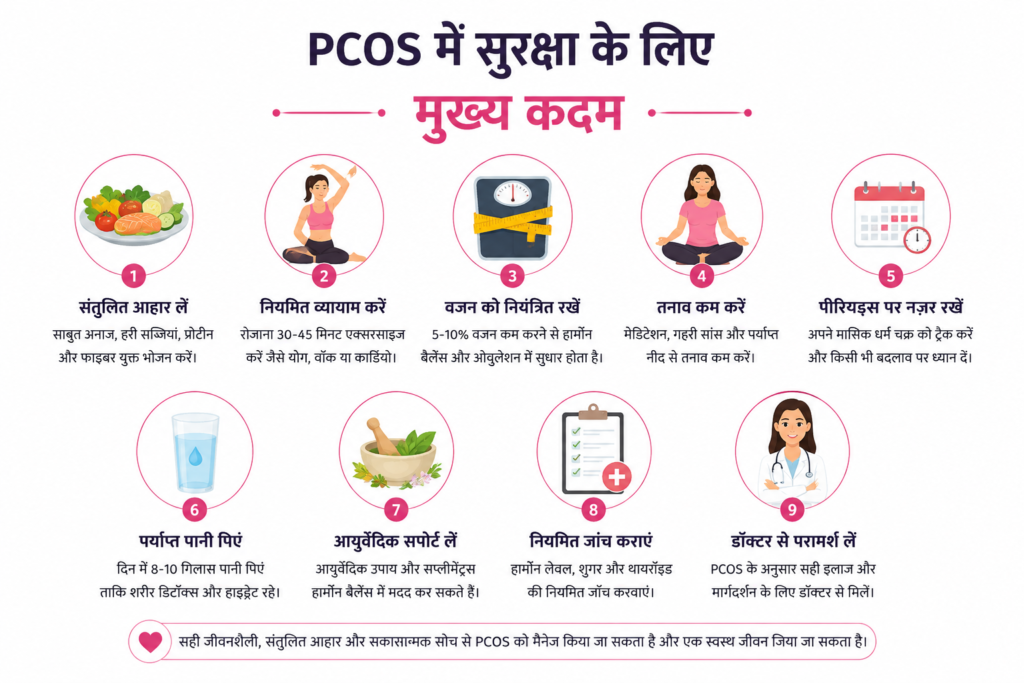
Yes, while there is currently no cure for PCOS, symptoms and associated health risks can often be managed through:
- Eating a balanced, nutritious diet
- Regular physical activity
- Maintaining a healthy weight
- Getting adequate sleep
- Managing stress
- Following treatment recommended by your healthcare provider
Some women also choose to include Ayurvedic practices and herbs that are traditionally used in Ayurveda to support overall wellness and hormonal health. These approaches should be viewed as complementary and not as a replacement for medical evaluation or treatment.
When Should You See a Doctor?
You should seek medical advice if you have:
- Irregular or absent menstrual periods
- Excess facial or body hair
- Persistent acne
- Difficulty becoming pregnant
- Rapid weight gain or difficulty managing weight
- Symptoms that are affecting your daily life
Early diagnosis and management can help reduce the risk of long-term complications.
How Does Ayurveda Traditionally View PCOS?
Ayurveda does not describe PCOS using the same medical terminology as modern medicine. Instead, it traditionally views women’s health through the lens of overall balance within the body.
The Ayurvedic approach emphasizes:
- Supporting healthy digestion (Agni)
- Maintaining balanced daily routines
- Nourishing the body with wholesome foods
- Managing stress effectively
- Supporting overall hormonal wellness through traditionally used herbs and lifestyle practices
Ayurveda is generally used as a complementary wellness approach and should not replace medical care for PCOS.
What Steps Should You Take If You Have PCOS?
If you’ve been diagnosed with Polycystic Ovary Syndrome (PCOS) or think you may have it, the first step is to seek guidance from a qualified healthcare professional. PCOS is a long-term condition, but many women are able to manage their symptoms effectively with the right combination of medical care and healthy lifestyle habits.
1. Get a Proper Medical Diagnosis
PCOS cannot be diagnosed based on symptoms alone. A doctor may recommend:
- A review of your medical history
- A physical examination
- Blood tests to evaluate hormone levels
- An ultrasound, if appropriate
A proper diagnosis helps rule out other conditions with similar symptoms.
2. Follow Your Doctor’s Treatment Plan
Treatment depends on your symptoms and goals, such as regulating menstrual cycles, managing acne, or planning a pregnancy. Your healthcare provider will recommend the most appropriate approach for your situation.
3. Maintain a Healthy Weight
For women who are overweight, even a modest amount of weight loss can improve insulin sensitivity and support more regular menstrual cycles. However, PCOS also affects women who are at a healthy weight, so weight is only one part of the picture.
Focus on:
- Gradual, sustainable changes
- Balanced nutrition
- Regular physical activity
- Avoiding crash diets
4. Eat a Balanced Diet
A nutritious eating pattern can support overall health and help manage metabolic changes associated with PCOS.
Include:
- Plenty of vegetables
- Whole fruits
- Whole grains
- Lean protein
- Healthy fats (nuts, seeds, olive oil)
- High-fibre foods
Limit:
- Sugary drinks
- Highly processed foods
- Foods high in added sugars
- Refined carbohydrates
5. Exercise Regularly
Aim for at least 150 minutes of moderate-intensity exercise per week, unless advised otherwise by your healthcare provider.
Examples include:
- Brisk walking
- Cycling
- Swimming
- Strength training
- Yoga
Regular exercise supports heart health, insulin sensitivity, and overall well-being.
6. Prioritize Quality Sleep
Poor sleep can affect hormones and metabolism. Try to:
- Sleep 7–9 hours each night
- Keep a consistent bedtime.
- Limit screen time before bed.
- Sleep in a comfortable sleep environment.
7. Manage Stress
Chronic stress can affect overall health and may affect hormonal balance.
Helpful strategies include:
- Meditation
- Deep breathing exercises
- Yoga
- Journaling
- Spending time outdoors
- Talking with supportive friends, family, or a mental health professional
Conclusion
- PCOS is a common hormonal condition that can affect menstrual health, fertility, metabolism, and overall well-being. While its symptoms and severity vary from person to person, early diagnosis and appropriate medical care are important for managing the condition and reducing the risk of long-term complications.
- Alongside medical guidance, adopting a healthy lifestyle—including a balanced diet, regular physical activity, quality sleep, and stress management—can support overall health. From an Ayurvedic perspective, maintaining balance through wholesome nutrition, daily routines, and herbs traditionally used in Ayurveda may help support hormonal wellness, menstrual health, and overall well-being. These practices should be viewed as complementary to, not a replacement for, evidence-based medical care.
- If you’re considering an Ayurvedic PCOS support formulation, choose products made with high-quality, traditionally used Ayurvedic ingredients from trusted manufacturers. When combined with a healthy lifestyle and professional medical advice, such formulations may help support women’s reproductive health, hormonal balance, and overall wellness. Always follow the product label and consult a qualified healthcare professional before starting any new supplement, especially if you have an existing medical condition or are taking medications.
- Take charge of your health today by making informed lifestyle choices, staying consistent with your wellness routine, and seeking timely medical guidance whenever needed.