
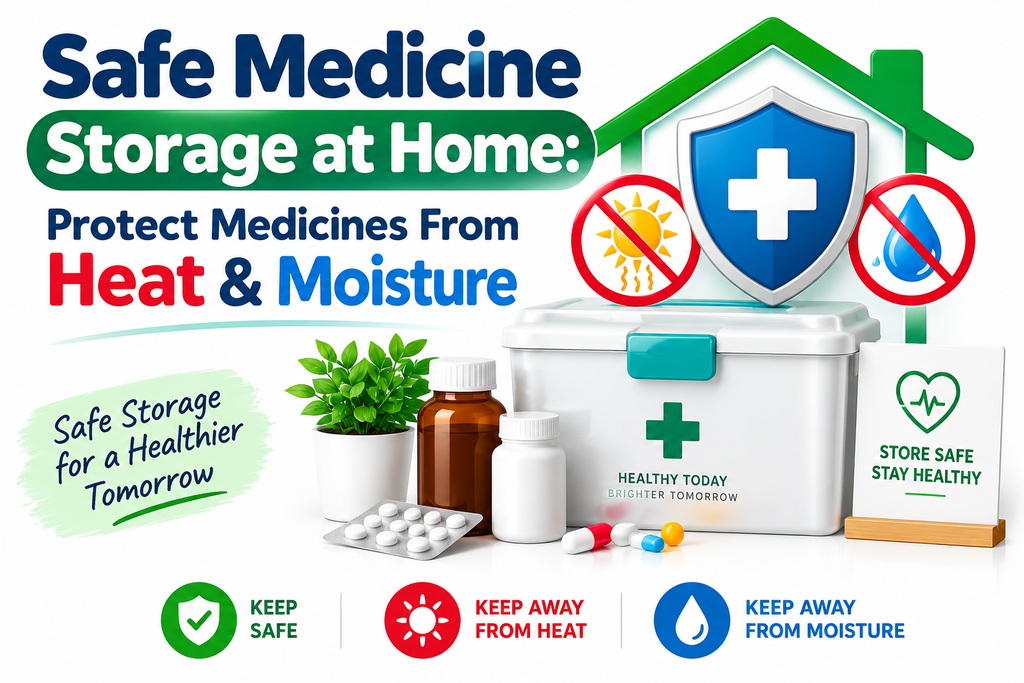
Medicine is meant to help you feel better, manage a health condition, or protect you during an emergency. Yet many people do not realise that how medicines are stored at home can affect how well they work. A tablet may be within its expiry date but still lose strength if it has spent weeks in a hot car, on a sunny windowsill, or inside a damp bathroom cabinet.
Heat, moisture, light, and air can all affect the stability of medicines. This applies to common painkillers, cough syrups, vitamins, creams, inhalers, antibiotics, insulin, eye drops, and prescription medicines. Safe medicine storage is simple once you know the basics: keep medicines cool, dry, protected from direct sunlight, and safely away from children.
Why Proper Medicine Storage Is Important
Every medicine is made under carefully controlled conditions. Its manufacturer tests the product to make sure it remains safe and effective until the expiry date—but only when it is stored as directed. The storage instructions on the label are not just small print. They tell you how to protect the active ingredients that make the medicine work.
When medicines are stored incorrectly, they can become weaker, change in texture, or sometimes become unsafe to use. For example, a tablet may crumble because of humidity, while a syrup may become too thick or change colour after excessive heat. Some damage is visible, but some is not. This means a medicine can look normal while no longer giving the expected result.
Proper storage also makes your home safer. Keeping medicines organised in their original packs prevents confusion between similar tablets. It helps you check the correct dose, expiry date, and name before using anything. Most importantly, it reduces the risk of accidental poisoning in children and pets.
How Heat Affects Medicines
Heat can cause chemical changes in medicines. When a medicine is exposed to high temperatures for too long, its active ingredients may slowly break down. As a result, the product may not work as strongly or as reliably as it should. This is especially important for medicines used for diabetes, asthma, allergies, heart conditions, infections, and other serious health concerns.
Many medicines are designed for controlled room temperature, often around 20°C to 25°C, though exact storage instructions differ from product to product. During hot weather, temperatures inside a house can rise above this range, particularly near windows, balconies, kitchens, and top-floor rooms. Direct sunlight makes the problem worse because it can heat a medicine package much faster than the surrounding room.
According to the UK Medicines and Healthcare products Regulatory Agency, heat can affect medicines such as tablets, inhalers, insulin, hormone patches, and adrenaline auto-injectors. The regulator advises keeping medicines out of hot cars and away from direct sunlight. also recommends checking the patient information leaflet for storage instructions.
Never Leave Medicines in a Hot Car
A parked car is one of the worst places to leave medicines. Even if the outside weather does not feel extremely hot, temperatures inside a closed vehicle can rise very quickly. The glove compartment, dashboard, car seat, and boot can all become much hotter than room temperature.
Leaving medicines in the car after visiting the pharmacy may seem harmless, but it can affect their quality. Insulin, inhalers, injections, and emergency medicines need special care because heat can make them less dependable. The U.S. Centers for Disease Control and Prevention also warns that insulin can degrade in heat and that inhalers can malfunction or burst in extreme temperatures recommends keeping medicines out of excessively hot places.
If you are travelling, carry medicines with you rather than leaving them in the vehicle. If a medicine needs to stay cool, ask your pharmacist about a suitable insulated bag or travel container. Do not place medicines directly on ice unless you have been told to do so, because freezing can also damage some products.
Moisture and Humidity Can Damage Medicines
Heat is not the only concern. Moisture can also change the quality of medicines. Humidity may cause tablets to soften, crack, crumble, stick together, or lose their normal shape. Capsules can become sticky or melt. Some liquid medicines may become thicker, separate oddly, or develop an unusual smell.
Bathrooms are often humid because of showers, baths, sinks, and wet towels. Kitchens can also be damp because of steam from cooking and boiling water. These areas may look convenient for storing medicines, but they are usually poor choices. A medicine cabinet above a sink or near a shower experiences changing heat and moisture almost every day.
The U.S. National Library of Medicine advises storing medicines in a cool, dry place and warns that heat and moisture in bathrooms may damage them. suggests safer options such as a dresser drawer, closet shelf, or a cabinet away from the stove and sink.
Why the Bathroom Cabinet Is Not Ideal
The name “medicine cabinet” makes the bathroom seem like the natural storage place, but this is often misleading. Every hot shower fills the bathroom with steam, and that steam can affect tablets and capsules over time. Even when the cabinet is shut, the surrounding air may still become warm and damp.
Instead, move medicines to a dry room with a stable temperature. A high bedroom drawer, lockable cupboard, or closet shelf is usually safer. Keep the medicine away from sunlight and make sure children cannot reach it.
This small change does not take much effort, but it can help medicines stay effective until their expiry date. It also helps you keep your medicine area neat and organised.
Best Places to Store Medicines at Home
For most medicines, the ideal place is cool, dry, dark, and secure. Choose an area where the temperature does not change a lot during the day. Avoid windowsills, balconies, cars, kitchens near stoves, bathrooms, laundry areas, and spaces near radiators or heaters.
Good options may include a high shelf in a bedroom wardrobe, a lockable storage box, a dry drawer, or a cabinet in a study room. Make sure the chosen location is out of the reach and sight of children. If you live in a very hot area, keep curtains closed during intense sunlight and avoid storing medicines against a wall that becomes hot in the afternoon.
The best storage location may differ for each product. Some medicines need protection from light, while others need refrigeration. Always read the label and leaflet before deciding where to keep a medicine.
A Simple Medicine Storage Checklist
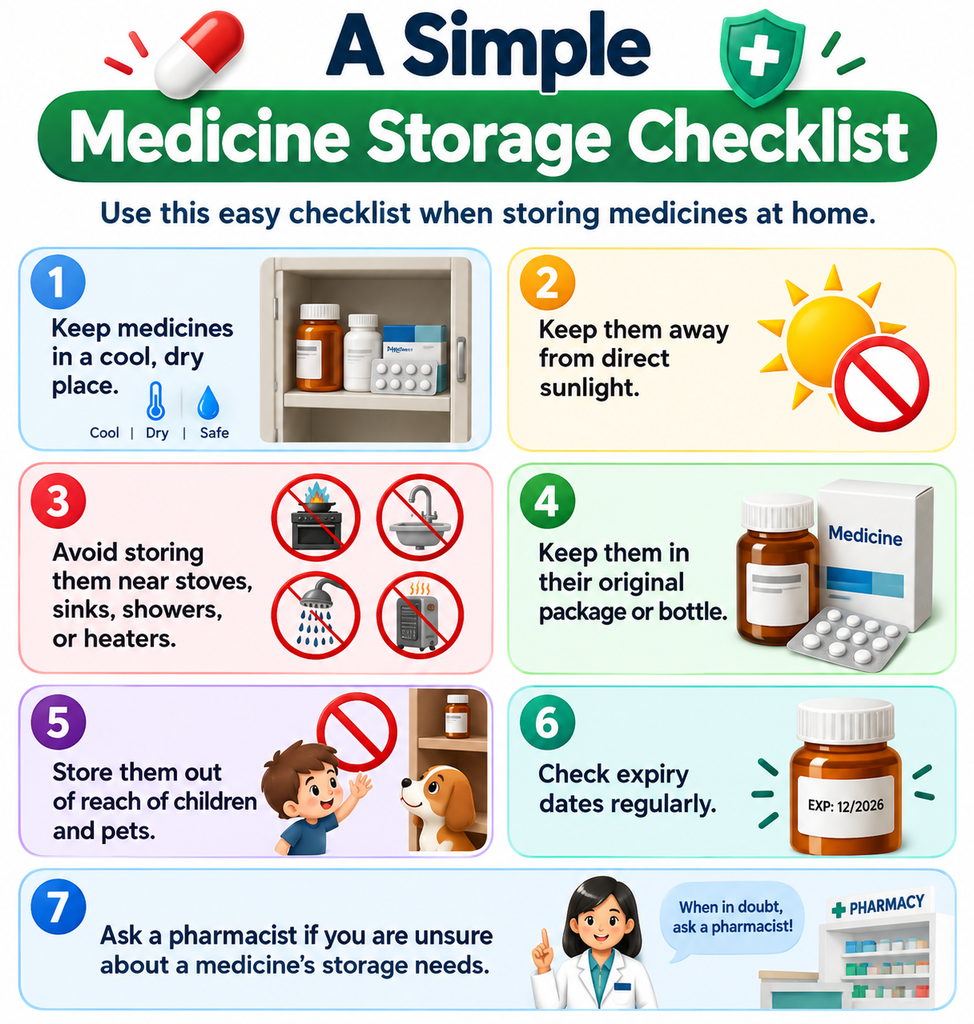
Use this easy checklist when storing medicines at home:
- Keep medicines in a cool, dry place.
- Keep them away from direct sunlight.
- Avoid storing them near stoves, sinks, showers, or heaters.
- Keep them in their original package or bottle.
- Store them out of reach of children and pets.
- Check expiry dates regularly.
- Ask a pharmacist if you are unsure about a medicine’s storage needs.
Keep Medicines in Their Original Packaging
Original packaging is important for more than appearance. The box, bottle, or blister strip contains useful information such as the medicine name, strength, dosage instructions, expiry date, and storage advice. If you remove tablets from their strip and put them into an unlabelled container, it becomes easier to take the wrong medicine by mistake.
Blister strips are designed to protect tablets from air and moisture until you need them. Try not to remove several tablets in advance unless your pharmacist says it is safe. Some medicines lose protection once they are removed from their original packaging.
Keep the outer carton too if it protects the medicine from light or contains important instructions. If you use a weekly pill organiser, fill it for a short period only and keep the original packs close by. Ask a pharmacist first if you use medicines that are sensitive to moisture.
Should Medicines Be Stored in the Refrigerator?
Not all medicines should be kept in the refrigerator. Refrigeration is necessary only when the label or pharmacist clearly says so. Some medicines can become unstable if they are too cold, and others may be damaged if they freeze. “Store in a cool place” does not always mean “keep in the fridge.”
Medicines that require refrigeration should be stored according to the temperature range on their label. Keep them away from the freezer compartment and do not place them against the back wall of the fridge, where they may freeze accidentally. The fridge door may not be suitable for temperature-sensitive products because its temperature changes whenever it is opened.
If your home experiences power cuts, speak with your pharmacist about what to do with refrigerated medicines. Never assume a medicine is still safe after a long power outage or accidental freezing. This is particularly important for insulin, certain injections, and some liquid antibiotics.
Signs That a Medicine May Be Damaged
Sometimes, you can see that a medicine has changed. Check tablets and capsules before using them. Warning signs can include a changed colour, unusual smell, cracked tablets, sticky capsules, leaking bottles, or liquid that looks different from before.
However, not all damage is visible. A medicine exposed to heat may look completely normal but have reduced strength. That is why you should not depend only on appearance. Consider where the medicine has been stored and whether it was left in a car, near a stove, or in a damp place for a long time.
Do not use a medicine if you are unsure about its quality. Contact a pharmacist and explain the medicine name, how it was stored, and how long it may have been exposed to heat or moisture. The pharmacist can advise whether it should be used, replaced, or disposed of safely.
Medicine Storage Safety for Children and Families
Safe medicine storage protects children as well as medicines. Young children may mistake colourful tablets, gummies, or sweet syrups for candy. Child-resistant caps can help, but they are not fully childproof. Medicines should always be stored high up, out of sight, and ideally in a locked cabinet or box.
Do not leave medicines on a bedside table, dining table, in a handbag, or inside a car. Put them away immediately after use. Also, never tell a child that medicine is candy just to persuade them to take it. This can make them think it is safe to take medicine without an adult.
Family members should avoid sharing medicines, even if they have similar symptoms. A product suitable for one person may not be appropriate for someone else. Keep every medicine clearly labelled and regularly remove products that are expired, damaged, or no longer needed.
Conclusion
Storage of medicine at home is an easy but important health habit. Heat and moisture can weaken medicines, change their texture, and reduce their effectiveness before the expiry date. Keep medicines in a cool, dry, dark, and secure place, away from cars, bathrooms, hot kitchens, direct sunlight, and children.
Always keep medicines in their original packaging and follow the label instructions. Refrigerate only the products that specifically require it. If a medicine has been exposed to heat, humidity, or freezing—or if it looks or smells unusual—ask a pharmacist before using it. A few careful storage habits can help ensure that your medicines are safe and ready to work when you need them.