
Dengue is a viral illness spread mainly through the bite of an infected Aedes mosquito. These mosquitoes can bite during the day as well as at night, so mosquito prevention should be part of your daily routine—especially during and after the monsoon season.
The good news is that dengue prevention at home starts with simple, regular actions: stop water from collecting, protect your family from mosquito bites, and know when to seek medical care.
Why dengue prevention at home matters?
Mosquitoes that spread dengue breed in clean or stagnant water held in small containers around homes. Buckets, coolers, flowerpots, tyres, trays and uncovered water tanks can all become breeding places if water is left standing.
Dengue prevention is not only one family’s responsibility. When homes and neighbourhoods reduce mosquito breeding, the risk can be lowered for everyone.
1. Remove standing water every week
The most important step is to check your home and surroundings at least once every week.
Look carefully at:
- Buckets, tubs and drums
- Desert coolers
- Flowerpot trays
- Rooftops and balconies
- Old tyres
- Plastic containers and bottles
- Pet-water bowls
- Water-storage containers
- Rainwater collected near drains
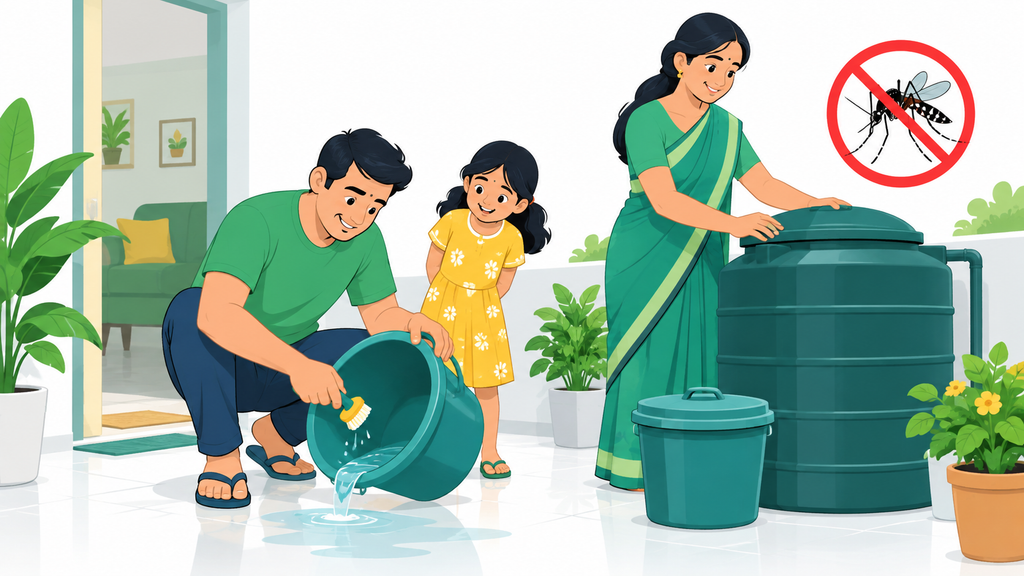
Empty, scrub and dry these items whenever possible. Keep water-storage containers properly covered. The World Health Organization advises covering, emptying and cleaning domestic water-storage containers weekly, as well as removing items that can hold water.
2. Keep your cooler and water tanks clean
Coolers are commonly used during warm weather, but water left inside for several days may allow mosquitoes to breed.
To reduce risk:
- Change cooler water regularly.
- Clean the cooler before refilling it.
- Do not leave unused coolers filled with water.
- Keep overhead and underground water tanks covered.
- Repair leaks that create water puddles around the home.
Small actions repeated every week can make a meaningful difference.
3. Protect yourself from mosquito bites
Because dengue mosquitoes may bite in the daytime, protection is useful throughout the day—not only at night.
Try these practical steps:
- Wear loose, full-sleeved clothes and full-length trousers when possible.
- Use window and door screens to keep mosquitoes out.
- Use mosquito nets if sleeping during the day or where screens are unavailable.
- Use mosquito repellents according to the label instructions.
- Use coils, vaporizers or other mosquito-control products safely and according to their directions.
Public-health guidance recommends preventing mosquito bites through protective clothing, repellents and mosquito-control measures around the home.
4. Make balconies, gardens and rooftops mosquito-safe
Outdoor spaces are easy to forget, but they often collect rainwater.
Check for:
- Water in plant trays
- Open dustbins
- Broken pots
- Tarpaulins holding rainwater
- Unused containers
- Puddles near drains
- Open construction materials or discarded tyres
Turn empty containers upside down, dispose of waste properly and make sure drains are not blocked. If there is a mosquito problem in your area, work together with neighbours to keep shared spaces clean.
5. Protect children, older adults and visitors
Children often play outdoors during the day, while older adults may spend time near balconies, gardens or open windows. Make mosquito prevention part of the household routine.
Before children go outside, check that they are wearing suitable protective clothing. Keep mosquito screens in good condition and make sure water does not collect near play areas.
If someone in the home has fever or feels unwell, they should also avoid mosquito bites. This helps reduce the chance of mosquitoes biting an infected person and then spreading the virus further.
Common symptoms of dengue
Dengue symptoms can range from mild to severe. Common symptoms may include:
- Fever
- Severe headache
- Pain behind the eyes
- Muscle, joint or body pain
- Nausea or vomiting
- Rash
- Weakness or tiredness
Symptoms can look similar to other illnesses, so a healthcare professional may need to assess the person and recommend testing. A blood test is used to confirm dengue.
Warning signs: seek urgent medical care
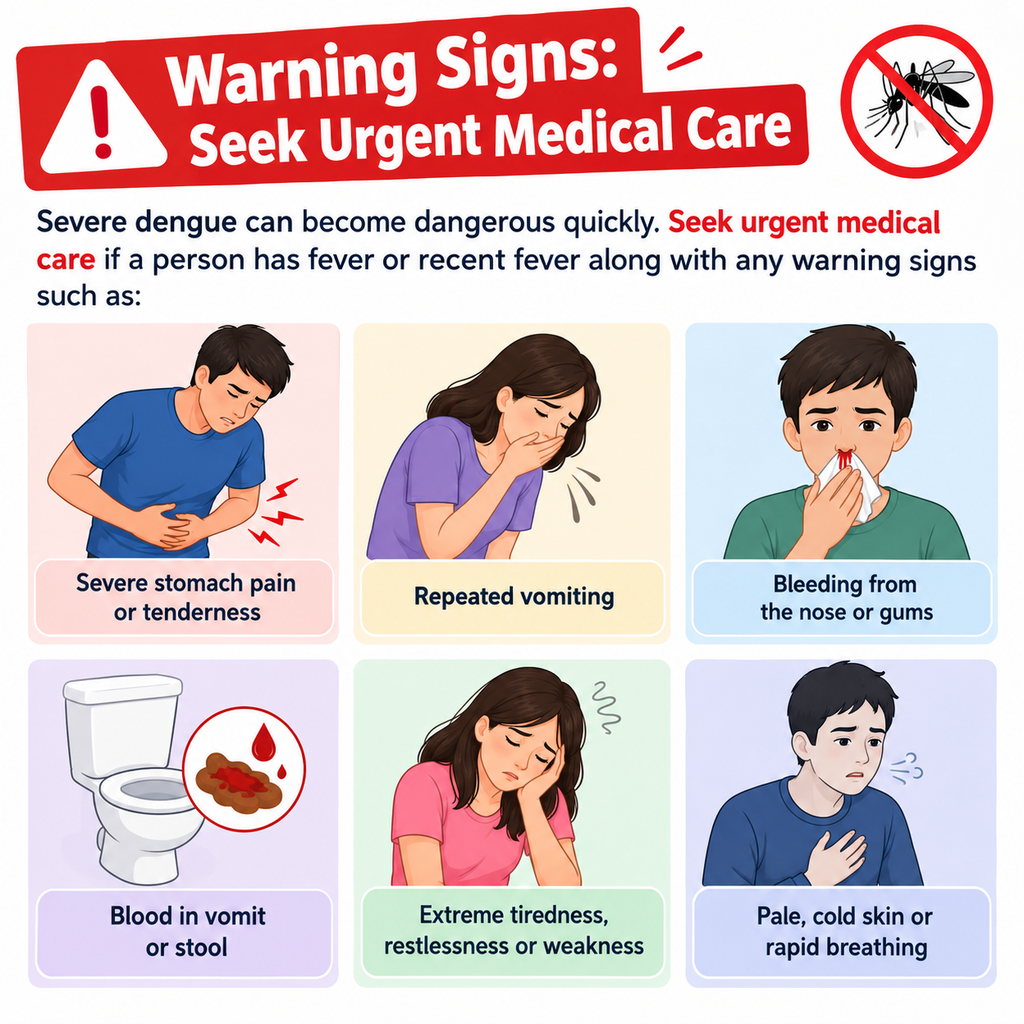
Severe dengue can become dangerous quickly. Seek urgent medical care if a person has fever or recent fever along with any warning signs such as:
- Severe stomach pain or tenderness
- Repeated vomiting
- Bleeding from the nose or gums
- Blood in vomit or stool
- Extreme tiredness, restlessness or weakness
- Pale, cold skin or rapid breathing
Warning signs can appear after the fever starts to go away, so do not assume that a lower fever always means recovery.
What to do if you suspect dengue
If someone has fever and dengue-like symptoms:
- Contact a doctor or local healthcare provider promptly.
- Encourage rest and adequate fluids, unless a clinician has given different advice.
- Use only medicines recommended by a healthcare professional.
- Do not self-medicate with aspirin or ibuprofen when dengue is suspected, as these medicines can increase bleeding risk. WHO notes that paracetamol may be used for pain management, while aspirin and ibuprofen should be avoided unless a clinician advises otherwise.
- Continue preventing mosquito bites around the ill person.
A weekly dengue prevention checklist
Use this simple checklist every week:
- Empty and scrub water containers
- Change cooler water
- Cover water tanks and drums
- Clean flowerpot trays
- Remove old tyres and waste containers
- Check rooftop, balcony and garden areas
- Use screens, nets and mosquito repellents
- Talk with neighbours about keeping shared areas clean
Final thoughts
Dengue prevention at home is based on consistency. A quick weekly check for stagnant water, combined with protection from mosquito bites, can help keep your family and neighbourhood safer.
At Rama Arogya Pharmacy, we encourage families to stay prepared during mosquito season. For help choosing suitable mosquito-control products or for general medicine guidance, speak with a qualified pharmacist. For fever, severe symptoms or suspected dengue, seek medical care promptly.